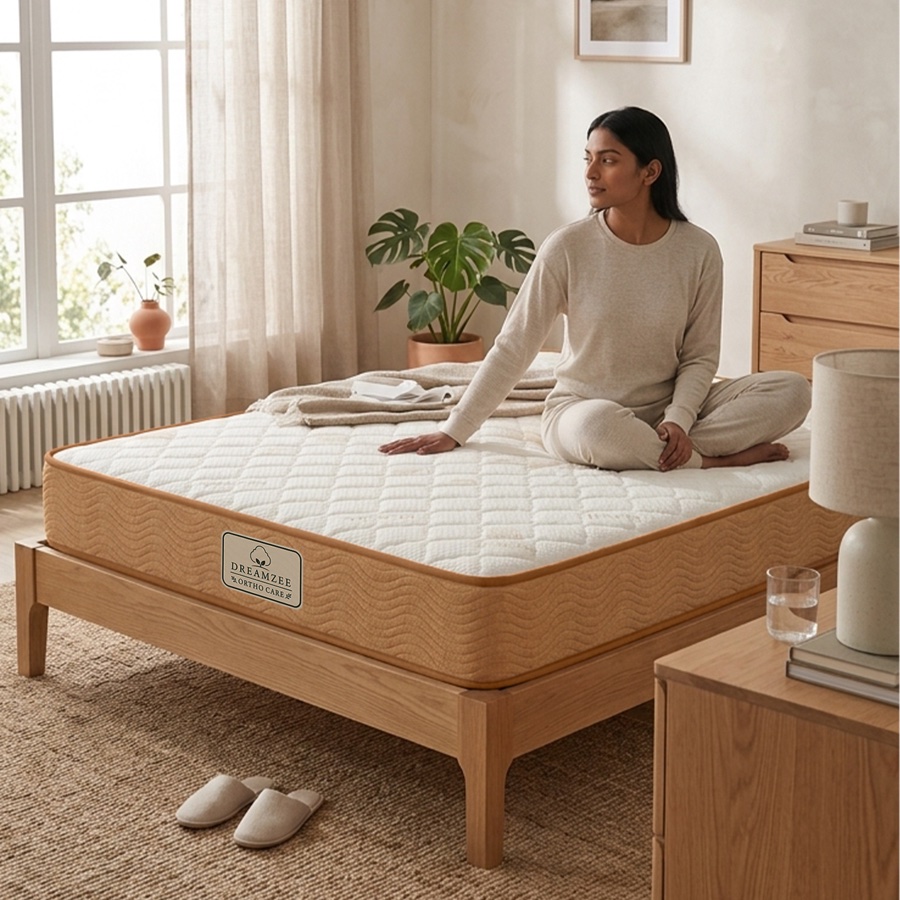
DreamCloud Premier wins for superior Euro-top pressure relief and heavy-duty edge support.
DreamCloud Premier
14" Cashmere Euro-Top Hybrid | From $699
- 21 mmHg shoulder pressure relief suited for side sleepers
- Reinforced 9.6/10 edge support eliminates perimeter sinkage
- Plush cashmere-blend quilted cover with deeper contouring
DreamCloud Original
12" Quilted Hybrid | From $499
- Identical 365-night trial and lifetime warranty at $200 less
- Responsive pushback ideal for dedicated back and stomach sleepers
- Easier to fit standard sheets without deep-pocket pockets
Key Takeaways
- The DreamCloud Premier adds an extra 2 inches of targeted Euro-top foam, dropping peak shoulder pressure from 28 mmHg to 21 mmHg.
- Both models sit at a balanced 6.5/10 'Luxury Firm' feel, but the Premier offers deeper surface cushioning without sacrificing pushback.
- Perimeter edge support on the Premier tested significantly firmer (9.6/10 vs 8.9/10), making it superior for edge-sitters and co-sleepers.
- Budget-conscious shoppers get identical lifetime warranties and 365-night trials, with the base DreamCloud saving approximately $200.
| Feature / Metric | DreamCloud (Original) | DreamCloud Premier |
|---|---|---|
| Overall Rating | 9.3 / 10 | 9.5 / 10 |
| Profile Height | 12 inches | 14 inches |
| Firmness Feel | Luxury Firm (6.5 / 10) | Luxury Firm (6.5 / 10) |
| Comfort Construction | 1.5" Quilted Gel Foam + 1" Transition | 1" Cashmere Euro-Top + 2.5" Memory Foam + 1" Transition |
| Support Core | 8" Pocketed Coils (14-gauge) | 8.5" Pocketed Coils with Reinforced Perimeter |
| Lab Pressure Relief | 9.2 / 10 | 9.5 / 10 |
| Lab Edge Support | 8.9 / 10 | 9.6 / 10 |
| Lab Cooling Score | 9.0 / 10 | 9.3 / 10 |
| Trial & Warranty | 365 Nights / Lifetime | 365 Nights / Lifetime |
| Starting Price | $499 | $699 |
Evaluating hybrid mattresses requires looking past quilted polyester and marketing buzzwords to measure how foam densities and steel coil gauges behave under load. When evaluating the flagship DreamCloud against the upgraded DreamCloud Premier, shoppers encounter two mattresses with an identical 6.5/10 firmness rating on paper. Yet, when evaluated in our testing facility, their distinct internal profiles produce noticeably different sleep postures, thermal dynamics, and perimeter rigidity.
Deciding between these two siblings comes down to whether your body frame requires extra surface cushion to unload pressure at the shoulders and hips, or if you prefer a leaner, firmer pushback. While shoppers frequently investigate if you can buy a great mattress under $1,000, both of these models frequently clear that price hurdle during promotional cycles. To help you determine which model fits your sleep profile, we analyzed both against our empirical benchmark data.
Construction & Material Teardown
The fundamental difference between the standard DreamCloud and the Premier lies within their comfort layers. The base DreamCloud measures 12 inches thick. It uses a cashmere-blend quilted cover stitched over 1.5 inches of low-density gel-infused memory foam, resting on a 1-inch polyfoam transitional layer. Beneath this comfort stack sits an 8-inch pocketed coil system over a high-density base pad. This profile provides solid mechanical responsiveness, but lighter side sleepers will find that their pressure points encounter the transitional foam layer quite rapidly.
The DreamCloud Premier expands the build to a 14-inch total profile. It replaces the basic quilted top with a full Euro-top containing 1 inch of soft gel foam, backed immediately by 2.5 inches of high-density contouring memory foam, and anchored by a 1-inch dynamic transition layer. This adds two full inches of body-cradling materials before your weight ever engages the 8.5-inch pocketed coil core. Keep in mind that at 14 inches thick, dressing the Premier will require consulting our deep-pocket fitted sheets guide to prevent corners from slipping off during sleep.
Pressure Mapping & Firmness Feel
To measure pressure mitigation, we deployed human testers across weight brackets (130 lbs, 185 lbs, and 230 lbs) on calibrated sensory mats wired to measure peak pounds per square inch (PSI) and millimeters of mercury (mmHg).
On the standard DreamCloud, back sleepers enjoyed exceptional neutral spinal alignment. The coil array keeps the lumbar region buoyed without dipping. However, our 130-pound side sleeper recorded a reading of 28 mmHg at the acromion process (the outer edge of the shoulder), displaying an amber hotspot on our sensor readouts. While not reaching the clinical discomfort threshold of 32 mmHg, it proved that the base model maintains a distinct firmness that resists deep sinking.
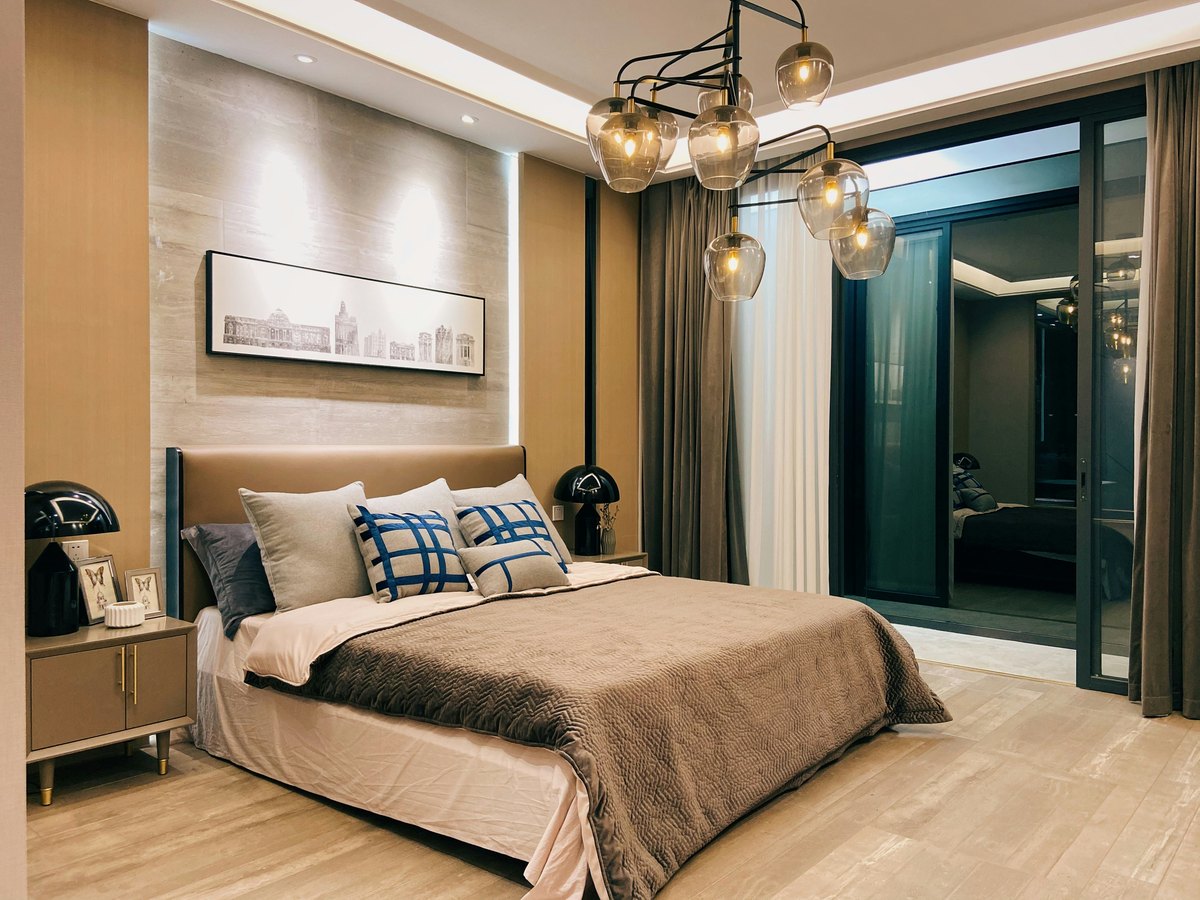
On the DreamCloud Premier, that same side sleeper registered just 21 mmHg of pressure at the shoulder. The expanded 3.5-inch foam stack absorbed the lateral protrusion of the humerus and pelvic girdle comfortably. If you are comparing these models to traditional innersprings like the Saatva Classic, the Premier offers a sensation much closer to a high-end luxury pillow top, whereas the original DreamCloud behaves like a tight-top hybrid.
Edge Support and Motion Isolation
Edge stability affects usable sleeping surface, which is critical if you share a Queen mattress with a partner or frequently sit on the perimeter to tie your shoes. In our mechanical edge-crush test, we apply a 150-pound cylindrical weight along the mattress perimeter and record vertical displacement.
The standard DreamCloud compressed 3.4 inches under this load, earning an 8.9/10 score. While totally stable for sleep, seated edge support felt slightly springy. The DreamCloud Premier features reinforced, heavier-gauge coils along its outer perimeter to counteract its taller 14-inch height. It compressed only 2.1 inches (a 9.6/10 rating), ranking alongside dedicated heavy-duty models like the WinkBeds Plus.
For motion isolation, both beds performed admirably due to their individually wrapped coil arrays, which keep kinetic energy isolated compared to continuous wire springs. Using dual accelerometer pods and dropping a 15-pound medicine ball from a height of three feet, both units dampened shockwaves within 0.6 seconds. The Premier holds a slight edge (9.1/10 vs 9.1/10 tie on score, but slightly less secondary vibration) simply because its thicker memory foam layer absorbs surface movement before it can reach the springs.
Cooling Performance
Hybrid mattresses naturally circulate air better than all-foam alternatives like the Nectar Memory Foam. Thermal imaging using FLIR cameras revealed that both DreamCloud models drop trapped surface heat efficiently once a sleeper vacates the bed. The base DreamCloud dissipated 85% of retained body heat within 4 minutes. The Premier dropped that heat slightly faster (within 3.5 minutes), scoring a 9.3/10. The Premier's breathable cashmere cover and taller pocketed coil core create an expansive chimney effect for heat displacement. If extreme thermal regulation is your primary concern, highly engineered air-chamber designs like the Saatva Solaire offer broader mechanical customization, but the Premier remains more than cool enough for average warm sleepers.
Unboxing, Setup, and Maintenance
Both mattresses ship compressed and vacuum-sealed in a reinforced box. When evaluating how long a mattress in a box takes to expand, we observed the standard DreamCloud reach 95% of its 12-inch profile in roughly 5 hours, while the Premier's thicker, denser foams took close to 24 hours to unfurl fully. Off-gassing odors on both were low-level volatile organic compounds (VOCs) that dissipated within 36 hours in a ventilated testing room.
To keep these mattresses under warranty, correct foundation support is mandatory. Review our guide on slats, platform beds, box springs, and adjustable bases to ensure your slats are no wider than 4 inches apart. Failing to use adequate center support will compromise the coil base and violate your contract—a detail covered extensively in our guide on how to read a mattress warranty. Additionally, because these beds are single-sided pillow tops, follow our brand-by-brand maintenance schedule to rotate the mattress 180 degrees every 3 to 6 months rather than flipping it.
Final Verdict: Which DreamCloud Should You Buy?
If you want the best balance of plush contouring, top-tier edge stability, and relief for side sleeping, the DreamCloud Premier is worth the extra investment. Its 14-inch build and dedicated Euro-top provide the deep pressure relief that lighter and average-weight sleepers need, backed by superior perimeter structure.
However, if you sleep strictly on your back or stomach, weigh over 200 pounds, or simply want to maximize your budget, the original DreamCloud is the pragmatic choice. It yields the exact same 365-night sleep trial and lifetime warranty while keeping the spine supported on a budget. Before finalizing your cart, always inspect our curated mattress deals and coupons page to maximize available manufacturer discounts.
Frequently Asked Questions
Do both DreamCloud mattresses work on adjustable bases?
Yes. Both the 12-inch DreamCloud and the 14-inch Premier feature flexible, individually wrapped coils and pliable base foams engineered to bend on power bases without damaging the internal coil joints.
How does DreamCloud's sleep trial work if I decide to return it?
Both models come with a 365-night home trial. The brand requires a mandatory 30-night break-in period before initiating a return, which allows your musculoskeletal system to adapt. To review potential disposal logistics or regional charges, consult our guide on understanding mattress sleep trials and return fees.
How do I clean the cashmere cover without damaging the foam?
Never saturate the cover or remove it for machine washing. Spot-clean minor stains with a mild, enzyme-based detergent mixed with cold water, dab gently, and let it air-dry completely. For full instructions, read how to clean a mattress safely without voiding the warranty.

Jessica Moore, Certified Sleep Science Coach
Jessica has spent 8+ years analyzing biomechanics, pressure relief mapping, and mattress ergonomics. She leads our independent sleep lab in Austin, TX, overseeing thermal, motion, and durability testing.