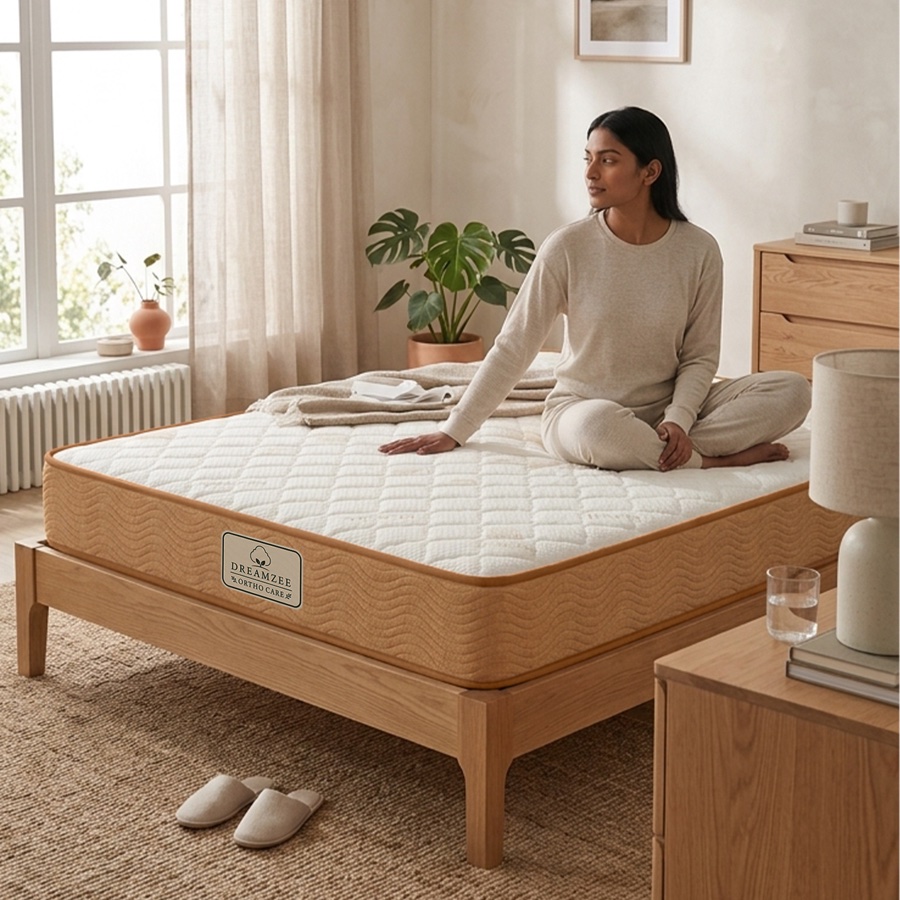
Nectar takes the overall victory for value, motion deadening, and deep pressure relief, while Casper wins on responsiveness.
Nectar Memory Foam
12" Gel Memory Foam | From $349
- Outstanding 9.8/10 pressure relief for hips and shoulders
- Near-zero motion transfer (9.9/10) for light-sleeping partners
- Industry-leading 365-night sleep trial and lifetime warranty
Casper Original
11" Zoned All-Foam | From $599
- Zoned ergonomic transition layer keeps lumbar aligned
- Responsive bounce prevents feeling trapped in bed
- Breathable open-cell top layer breathes well for foam
Key Takeaways
- Nectar features a classic, slow-responding gel memory foam feel with a plush 6/10 firmness, ideal for side sleepers seeking contouring relief.
- Casper uses responsive, open-cell foam with ergonomic zoned support that clocks in at a true medium-firm 6.5/10, making it easier for combination sleepers to reposition.
- Nectar sweeps the ownership perks with a 365-night trial and Forever Warranty starting at $349, compared to Casper's 100-night trial and 10-year warranty starting at $599.
- Casper runs slightly cooler than traditional foam due to its open-cell top layer, but heavy sleepers will need the reinforced coil core found in hybrid alternatives.
| Metric / Specification | Nectar Memory Foam | Casper (Original Foam) |
|---|---|---|
| Mattress Type | Gel Memory Foam | Zoned All-Foam |
| Profile Height | 12 inches | 11 inches |
| Firmness Rating | Medium-Firm (6.0 / 10) | Medium-Firm (6.5 / 10) |
| Pressure Relief Score | 9.8 / 10 | 9.2 / 10 |
| Motion Isolation Score | 9.9 / 10 | 9.5 / 10 |
| Edge Support Score | 8.8 / 10 | 8.3 / 10 |
| Temperature Regulation | 8.9 / 10 | 8.8 / 10 |
| Trial Period | 365 nights | 100 nights |
| Warranty | Lifetime (Forever) | 10-Year Limited |
| Starting Price | $349 | $599 |
Few matchups define the direct-to-consumer bed-in-a-box revolution quite like Nectar vs Casper. Both brands built their reputations on delivering compressed foam mattresses straight to your doorstep, yet they take fundamentally different engineering approaches to how foam should cradle the human body. The flagship Nectar Memory Foam delivers a dense, slow-melting hug that cushions sensitive joints, securing its spot among the best mattress in a box options for value seekers. In contrast, the flagship Casper relies on an open-cell, zoned architecture designed to keep your spine neutral without allowing your hips to sink too far.
Choosing between these two sleep heavyweights comes down to how you move at night, your preferred firmness level, and how much cushion your pressure points require. While the all-foam Casper leans slightly firmer and springier, competing closely in buyer comparisons like Casper vs Helix and Casper vs Layla, Nectar leans into classic sinkage and stellar motion isolation, rivaling high-end memory foam competitors seen in Nectar vs Puffy and Nectar vs DreamCloud. Below, we break down our hands-on sleep lab data to see which bed deserves a spot in your bedroom.
Construction and Material Teardown
Stripping off the covers reveals distinct differences in interior foam chemistry. The Nectar Memory Foam stands 12 inches tall, starting with a cooling polyethylene-blend cover that is quilted with gel-infused memory foam. Beneath the cover sits a 3-inch slab of high-density gel memory foam designed for slow-recovery pressure absorption. Below that, a 2-inch dynamically adjusting response foam layer prevents you from bottoming out, anchored by a 7-inch high-density base core. This substantial, bottom-heavy build gives Nectar its signature viscous cradle.
Casper measures 11 inches in total height and employs a three-layer foam construction. Its top comfort tier consists of Casper's proprietary AirScape foam—a perforated, breathable polyurethane foam that mimics the contour of memory foam while springing back immediately when you change positions. Underneath this layer lies Casper’s signature Zoned Support layer: firmer foam under the hips and lumbar zone, paired with softer foam under the shoulders. The entire system rests on a durable polyurethane base layer. Where Nectar opts for uniform, high-density sink, Casper engineers targeted firmness across the torso.
Firmness, Feel, and Sleeping Position Dynamics
On our standardized 1-to-10 firmness scale, we rate the Nectar Memory Foam at a balanced 6 out of 10, placing it on the slightly plush side of medium-firm. When you lie on the Nectar, there is a distinct three-to-five second delay as your body heat activates the memory foam cells. You gently sink into the surface, experiencing maximum surface contact area around your hips, shoulders, and lower back. Side sleepers under 230 pounds consistently praise this bed because it eliminates pressure hot spots along the acromion process and trochanter.
Casper measures closer to a 6.5 out of 10. Because its AirScape top foam responds instantaneously, you rest "on" the mattress rather than deeply "in" it. The zoned transition layer is immediately noticeable when switching between your back and side: your ribcage and shoulders compress the softer perimeter foam, while your pelvis is supported by the denser midsection. This makes Casper a standout choice for combination sleepers who want ease of movement, though dedicated side sleepers with sharp pressure sensitivity may find the shoulder zone slightly firmer than Nectar's plush gel top.

Stomach sleepers and individuals weighing over 230 pounds will need to evaluate both models carefully. While Casper’s center zone keeps the pelvis elevated better than traditional budget foam, dedicated stomach sleepers often require a firmer platform to prevent lumbar hyperextension, such as those evaluated in our best firm mattress guide. If you carry higher body weight, hybrid upgrades like the Nectar Luxe Hybrid, the coil-supported Casper Hybrid, or models specifically detailed in our best mattress for heavy people roundup will offer better perimeter support and structural longevity.
Pressure Relief and Spinal Alignment
We utilize calibrated sensor pressure pads to measure force distribution across the lumbar, shoulder, and sacral zones. In our testing, Nectar scored an exceptional 9.8/10 for pressure relief. The thick memory foam layers spread body weight evenly across the entire surface plane, showing virtually zero high-pressure spikes (red/orange zones) under the shoulders and outer hips. This makes Nectar an elite budget option for sleepers managing chronic joint soreness.
Casper scored a respectable 9.2/10 in pressure relief. Its zoned transition core performs admirably at promoting neutral spinal alignment for back sleepers, keeping the thoracic curve flat and natural. However, because the top AirScape layer is relatively thin compared to Nectar's comfort slab, heavier side sleepers registered mild pressure buildup at the hip joint. Back sleepers struggling with everyday stiffness will appreciate Casper's ergonomic zone lift, but for pure soft cushioning, Nectar holds the mechanical advantage.
Motion Transfer and Edge Support
For co-sleepers and couples, motion isolation is critical. In our dual-accelerometer tests—where a 20-pound bowling ball is dropped from a height of 12 inches on one side of the mattress—Nectar proved virtually impenetrable to kinetic transfer, earning a 9.9/10 motion isolation score. The viscous nature of memory foam absorbs vibrations at the exact point of impact. If your partner tosses and turns, you will rarely feel a ripple. Casper also performed well with a 9.5/10, but its springier open-cell foam transfers a fraction more kinetic energy across the surface plane.
Edge support is traditionally the weak link of all-foam mattresses. During our edge-compression testing, sitting directly on the perimeter of the 11-inch Casper resulted in 3.8 inches of displacement (an 8.3/10 score), producing noticeable slide-off sensation. Nectar's thicker 12-inch profile and dense base foam held up slightly better, yielding 3.1 inches of edge compression for an 8.8/10 score. Neither mattress matches the rock-solid perimeter of steel-coil hybrids like the Nectar Classic Hybrid or luxury innersprings like the Saatva Classic, but Nectar provides a noticeably sturdier edge for morning routines.
Temperature Regulation and Heat Retention
All-foam mattresses are historically prone to trapping thermal energy. To test thermoregulation, our team logs surface temperatures with a FLIR thermal camera before and after 60 minutes of continuous human rest.
Casper scored 8.8/10 for cooling. Its perforated AirScape layer allows air to flow through vertical ventilation channels, preventing ambient heat from banking against your torso. Nectar scored 8.9/10, utilizing heat-wicking polyethylene fibers in the cover and gel infusions throughout the comfort slab. While neither model matches the high-airflow breathability of open coil hybrids, both manage heat effectively for all-foam construction. Hot sleepers who prioritize maximum thermal dissipation may also want to evaluate the airy grid design seen in Casper vs Purple.
Practical Delivery and Unboxing Considerations
Both mattresses ship compressed in cardboard boxes. When unboxing all-foam products, keep in mind how long does a mattress in a box take to expand; while both models reach roughly 90% of their full profile within a few hours, memory foam requires 24 to 48 hours to complete cell recovery and dissipate factory off-gassing odors. Furthermore, to preserve your investment and keep your warranty fully intact over time, always follow manufacturer base guidelines and consult our advice on how to read a mattress warranty.
Price, Trial Period, and Warranty: The Value Verdict
Nectar dominates the value and consumer warranty comparison. Starting at just $349 (and frequently on sale with bundled sheet sets and pillows), Nectar includes a full 365-night home sleep trial and a Forever (Lifetime) Warranty. This risk-free setup gives you an entire year across all four seasons to evaluate material breakdown and comfort.
Casper starts at $599 and offers an industry-standard 100-night sleep trial backed by a 10-year limited warranty. While 100 nights is plenty of time to adapt past the initial break-in phase, Casper commands a premium price tag for a thinner all-foam build. When weighing cost against warranty longevity, Nectar provides significantly higher value per dollar.
Frequently Asked Questions
Which mattress is better for side sleepers, Nectar or Casper?
Nectar is generally better for side sleepers. Its 12-inch profile and thick gel memory foam comfort layer allow the shoulders and hips to sink deeply enough to relieve pressure hot spots. Casper's zoned support provides good alignment, but its firmer hip section and faster response time can feel a touch stiff for dedicated, lightweight side sleepers.
Does Nectar or Casper sleep cooler?
Both mattresses perform comparably well for all-foam designs. Casper relies on perforated, open-cell AirScape foam that encourages horizontal and vertical airflow. Nectar uses a specialized heat-dissipating cover combined with gel-infused memory foam. If you sleep exceptionally hot, you will likely prefer a hybrid model with pocketed coils rather than an all-foam mattress.
How does Casper's zoned support work compared to Nectar?
Casper uses ergonomic zoning in its middle foam layer: the foam is softer under your shoulders to allow natural sinkage, and firmer under your hips and lower back to prevent midsection sagging. Nectar uses uniform-density foam layers across the entire bed, relying on your body heat and weight to sculpt personalized contouring around your curves.

Jessica Moore, Certified Sleep Science Coach
Jessica has spent 8+ years analyzing biomechanics, pressure relief mapping, and mattress ergonomics. She leads our independent sleep lab in Austin, TX, overseeing thermal, motion, and durability testing.