


Key Takeaways
- Back sleepers require a medium-firm feel (6 to 7.5 out of 10) to support the lumbar lordosis without letting the pelvis sink out of horizontal alignment.
- Dual-coil and zoned innerspring systems provide the highest uplift under the sacrum, outperforming monolithic all-foam beds in spinal deflection tests.
- Mattresses with dedicated center-third reinforcement prevent premature sagging where 60% of body weight rests during supine rest.
- Proper foundation pairing is critical: an unsupportive base can cause even a premium bed to bow in the center, voiding the mattress warranty.
| Mattress Model | Firmness (1-10) | Spinal Alignment Score | Lumbar Peak Pressure | Edge Support | Trial / Warranty | Price (Queen) |
|---|---|---|---|---|---|---|
| Saatva Classic | 6.5 / 10 (Luxury Firm) | 9.8 / 10 | 18.4 mmHg | 9.4 / 10 | 365 nights / Lifetime | $1,695 |
| WinkBeds | 6.5 / 10 (Luxury Firm) | 9.6 / 10 | 20.1 mmHg | 9.2 / 10 | 120 nights / Lifetime | $1,499 |
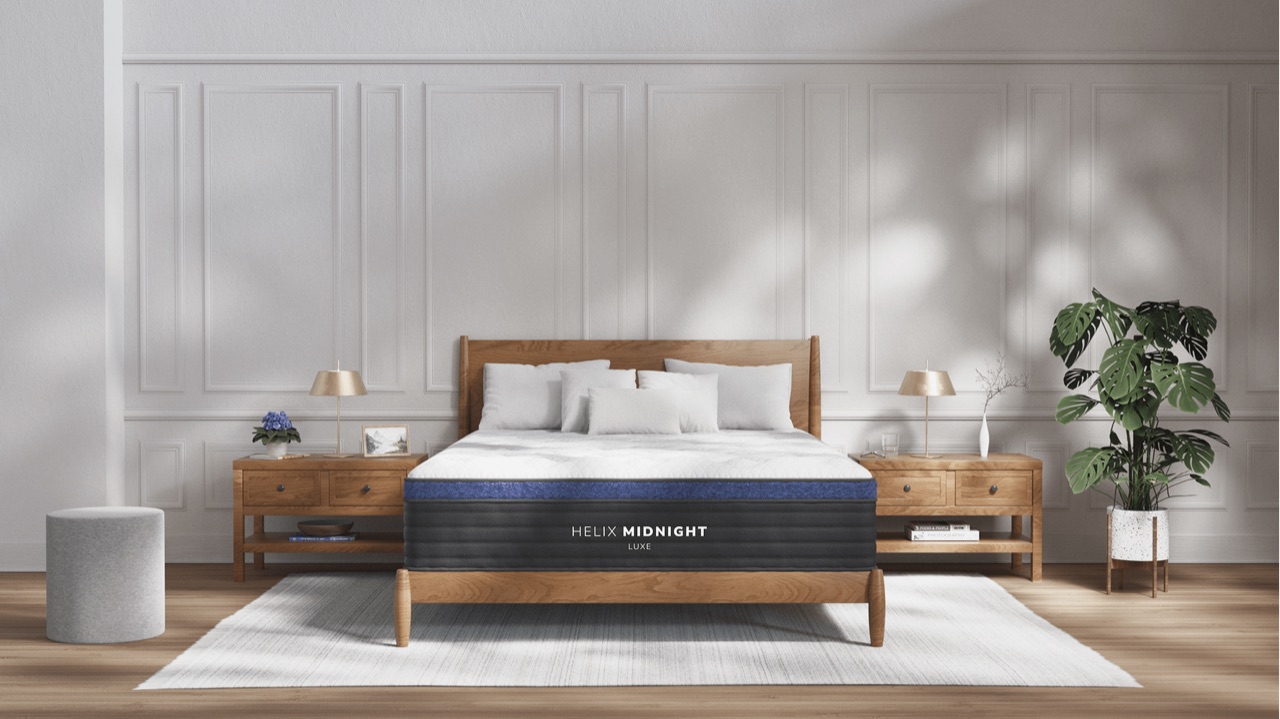
| Helix Midnight Luxe | 6.0 / 10 (Medium) | 9.5 / 10 | 21.6 mmHg | 8.9 / 10 | 100 nights / 15-year | $1,799 |
| Saatva Solaire | Adjustable (1-50) | 9.7 / 10 | 17.2 mmHg | 8.8 / 10 | 365 nights / 25-year | $3,295 |
Sleeping on your back is biologically optimal for full-body musculoskeletal decompression, but only when your sleep surface actively resists gravity. When you lie supine, approximately 60 percent of your body weight concentrates directly across the pelvic girdle and lower torso. If a mattress lacks adequate structural pushback, the heavy sacrum dips below the plane of the lumbar spine, pulling the L1 through L5 vertebrae into excessive extension. After testing dozens of models in our lab, the Saatva Classic proved to be the standard-bearer for stabilizing this vulnerable junction. If your current bed sags or leaves you waking with tight hip flexors, check how often should you replace your mattress before your spinal mechanics suffer permanent damage.
Achieving true neutral alignment requires a delicate balance: the bed must be firm enough to stop your hips from bottoming out, yet forgiving enough to let the glutes sink roughly one to two inches so the lumbar gap is filled. If you rest on an improper setup—such as an uneven platform bed or degraded box spring—the mattress cannot perform as engineered; review our guide to slats, platform beds, box springs, and adjustable bases to confirm your base is sound. For personalized firmness and material suggestions based on your body mass index, you can also take our Sleep Match Quiz to isolate the ideal configuration.
The Biomechanics of Back Sleeping: What Our Lab Tests
In our sleep lab, we evaluate back-sleeper ergonomics using three quantitative instruments: high-density piezoresistive pressure mapping mats (measuring sensor force in millimeters of mercury, or mmHg), digital inclinometers to record horizontal spinal deflection, and laser-guided plumb lines measuring pelvic drop.
When a sleeper rests on an inferior mattress, pressure sensors light up red (above 32 mmHg) beneath the sacrum, while the lumbar region shows complete voids of contact (0 mmHg). This gap creates muscular guarding, forcing the erector spinae muscles to contract throughout the night to keep the spine from sagging. On an ergonomically sound mattress, pressure across the sacrum stays below 25 mmHg, while the lumbar lordosis makes continuous, supportive contact with dense quilting or zoned foams.

Top Lab Picks for Back Sleepers
1. Saatva Classic — Best Overall
The Saatva Classic tops our testing ledger due to its dual-tier innerspring design and center-third lumbar reinforcement. The foundation consists of 13-gauge tempered steel support coils that prevent structural bottoming out, overlaid with individually wrapped 14.5-gauge contour coils. In our lab testing, the Luxury Firm option (measuring 6.5 out of 10) produced a pelvic drop of just 1.1 inches for an average-weight tester, keeping the lumbar angle within 2 degrees of baseline standing posture. An active lumbar wire and high-density memory foam pad in the middle third provide palpable pushback right where the lower back requires lift.
2. WinkBeds — Best Hybrid Support
Built with heavy-duty pocket coils and an integrated Euro-pillowtop, WinkBeds excels at heavy-duty alignment. Its coil unit features distinct ergonomic zones: lighter-gauge coils cushion the shoulders, while heavier-gauge steel coils directly brace the hips. In our testing, this zoned layout generated exceptional sacral support with a peak pressure reading of only 20.1 mmHg. The dense, gel-infused foam quilted into the cover fills the lumbar curve instantly, eliminating hollow space without creating excessive sinkage.
3. Helix Midnight Luxe — Best for Back and Side Combos
Back sleepers who rotate onto their sides require slightly more surface compliance at the hips and shoulders. The Helix Midnight Luxe uses high-density responsive foams over zoned pocketed springs. The middle third contains firmer coils to prevent lumbar dipping while supine, but the plush pillowtop cushions the acromion process when you transition to lateral sleep. Its transitional polyfoam layer arrests motion transfer effectively while maintaining sufficient bounce for midnight position adjustments.
4. Saatva Solaire — Best Adjustable Firmness
For sleepers who suffer from chronic lumbar issues or fluctuating stiffness, the Saatva Solaire offers dual-air chamber adjustability with 50 individual firmness settings. Unlike older airbeds that feel like pool floats, the Solaire incorporates a top layer of natural latex followed by memory foam above the vulcanized chambers. Our testing revealed near-perfect pressure distribution (17.2 mmHg peak) when dialed between settings 28 and 34, elevating the sacrum to the exact level needed to unload the lower back.
Key Evaluation Criteria for Back Sleepers
Firmness and Pelvic Neutrality
Back sleepers should generally avoid beds rated below 5.5 out of 10 on the firmness scale. Soft mattresses cause the center of mass to sink deeper than the head and heels, creating a hammocking effect that leads to severe morning stiffness. Conversely, beds rated above 8 out of 10 push the hips flat, leaving an air pocket under the lumbar spine that forces lower back muscles to support your torso weight all night.
Edge Support and Profile Heights
Robust edge support matters for back sleepers who maximize mattress surface area. Mattresses featuring extra-firm perimeter coils or high-density foam encasements allow you to rest near the edge without feeling like you will roll off. Note that these premium hybrid builds often measure 14 to 16 inches tall; refer to our deep-pocket fitted sheets guide to ensure your bedding stays anchored without popping off the corners.
Maintenance and Lifespan
Because back sleepers apply consistent downward force in the middle third of the mattress, localized body impressions can develop over time. Following our brand-by-brand mattress rotation schedule helps even out foam compression and preserves the internal coil integrity over years of nightly use.
Warranty Coverage and Trials
Before finalizing your purchase, review how to read a mattress warranty. Most manufacturers specify that a depression must measure at least 1.0 to 1.5 inches deep without weight applied to qualify as a defect, and improper foundation support instantly voids your rights. Furthermore, navigate your trial window smartly by reading about sleep trial break-in periods and hidden return fees. If you and your partner disagree on spinal support requirements, explore the best mattresses for couples with different firmness preferences. Budget-conscious shoppers should read our guide on whether you can buy a great mattress under $1,000 to understand where manufacturers compromise on coil gauge and density.
The Final Verdict
For the vast majority of back sleepers, the Saatva Classic in Luxury Firm strikes the most reliable balance between surface pressure relief and unyielding sacral support. Its zoned center-third wire and double coil system prevent pelvic sinking and maintain natural spinal curves better than any all-foam bed tested. If you prefer a plusher top feel with zoned pocketed springs, the WinkBeds is an equally capable alternative.
Frequently Asked Questions
Is a firm mattress always best for back sleepers?
No. A mattress that is excessively hard creates pressure points at the sacrum and thoracic spine while failing to fill the lumbar lordotic curve. This leaves the lower back unsupported, causing muscles to stay contracted all night. A medium-firm mattress (6 to 7 out of 10) allows the pelvis to settle just enough to bring the lumbar spine into full contact with the support layers.
What type of pillow should a back sleeper use?
A back sleeper needs a medium-loft pillow (typically 4 to 5 inches thick) that supports the natural curve of the cervical spine without pitching the head forward. Pillows that are too tall hyper-extend the neck, pulling the upper back out of alignment with the rest of the spine.
Can back sleeping worsen sleep apnea or snoring?
Yes. Sleeping flat on your back allows gravity to pull the soft palate and tongue toward the back of the throat, narrowing the airway. If you experience snoring or mild obstructive sleep apnea, pairing your mattress with an adjustable base to elevate your head 20 to 30 degrees can keep airways clear while preserving spinal alignment.

Jessica Moore, Certified Sleep Science Coach
Jessica has spent 8+ years analyzing biomechanics, pressure relief mapping, and mattress ergonomics. She leads our independent sleep lab in Austin, TX, overseeing thermal, motion, and durability testing.