


Key Takeaways
- Luxury hinges on verifiable specs: coil-on-coil builds, steel tempering, and 4 to 5 lb/cu.ft. foam densities.
- Dual-firmness air-chamber systems provide custom micro-adjustments for couples with starkly differing sleep profiles.
- Bespoke high-profile hybrid profiles (14 to 16 inches) require deep-pocket sheets and reinforced, rigid base support.
- Warranties on luxury beds demand strict foundation compliance; sagging thresholds below 0.75 inches indicate higher structural confidence.
| Model | Build Type | Firmness (1-10) | Edge Deflection | Surface Temp Drop | Trial / Warranty | Starting Price |
|---|---|---|---|---|---|---|
| Saatva Classic | Dual Innerspring Hybrid | 4, 6, or 8 (Custom) | 2.6 inches | 4.8°F (5 min) | 365 nights / Lifetime | $1,095 |
| Simmons Beautyrest Black | Pocketed Coil Hybrid | 6.5 / 10 | 2.8 inches | 5.1°F (5 min) | 100 nights / 10 years | $1,749 |
| Saatva Solaire | Adjustable Air Chamber | Variable (1-10) | 2.9 inches | 3.9°F (5 min) | 365 nights / Lifetime | $2,699 |
| Tempur-Pedic TEMPUR-Luxe | High-Density Memory Foam | 5.5 / 10 | 3.4 inches | 3.4°F (5 min) | 90 nights / 10 years | $1,699 |
| Loom & Leaf | Multi-Layer Visco Memory Foam | 6.0 / 10 | 3.2 inches | 3.7°F (5 min) | 365 nights / Lifetime | $1,195 |
When you cross the threshold into premium bedding, marketing language turns aggressively abstract. Showrooms push terms like "artisan-stitched," "cloud comfort," and "diamond-infused cooling." Yet when we strip back quilted covers in our testing facility, genuine luxury reveals itself strictly through engineering specs: wire gauge, coil annealing, high-density comfort foams exceeding 4.0 pounds per cubic foot, and hand-tufted assemblies that bypass toxic chemical adhesives.
While budget beds attempt to answer can you buy a great mattress under $1,000 through single-origin polyurethane slabs, true high-end sleep surfaces rely on complex composite layering. Choosing between high-end direct-to-consumer models like the Saatva Classic and legacy luxury builds like the Simmons Beautyrest Black requires understanding what componentry you are actually paying for. The ongoing debate of bed-in-a-box vs. showroom mattresses takes on a different tone here; luxury compressed hybrids often use premium components, but uncompressed white-glove deliveries preserve wire tempering and perimeter borders from the stresses of extreme mechanical boxing.
The Engineering Signifiers of Luxury Construction
In our sleep lab, we look for structural hallmarks that separate heirloom-grade mattresses from inflated retail pricing:
* Dual-Stage and Annealed Coils: Standard mattresses use single-layer heat-treated coils. Luxury builds employ either stacked pocketed coils over hourglass innersprings, or braided tri-strand carbon wire (such as Beautyrest's T3 system) which mitigates lateral oscillation while doubling tensile fatigue life.
* Foam Density Over Foam Depth: Low-cost beds boast five inches of foam, but that foam frequently checks out at a flimsy 1.8 lbs/cu.ft. High-end memory foam beds, exemplified by the Loom & Leaf, integrate dense 5-lb visco foams that maintain structural rebound for a decade without premature wallowing.
* Active Micro-Zoning: Instead of uniform resistance from head to toe, premium tiers incorporate zoned wire gauges (e.g., 13.75-gauge wire through the central third for lumbar anchoring, transitioning to 14.5-gauge at the shoulders) to keep spinal curvature neutral.
* Hand-Tufting vs. Hot-Melt Adhesives: Hand-driven wool rosettes clamp comfort layers straight to the base spring grid. This mechanical binding prevents internal slipping, eliminate volatile organic compound emissions from glue layers, and extends internal integrity.
Lab Performance Breakdown: Top Luxury Performers
1. Saatva Classic: The Innerspring Benchmark
During our 200-pound load tests, the Saatva Classic registered just 2.6 inches of perimeter edge deflection, outperforming 90% of hybrid models we evaluate. Its foundational base utilizes 13-gauge open coils, while the upper comfort deck houses individually pocketed 14.5-gauge coils crowned with an organic cotton Euro-top. Thermal dissipation tests showed a 4.8°F surface drop within five minutes of body removal, driven by continuous airflow through the dual-spring core. Side sleepers below 130 pounds might find the Luxury Firm variant somewhat rigid across the humerus, but average and heavyweight back sleepers consistently track optimal spinal alignment in our digital imaging.
2. Simmons Beautyrest Black: Traditional Heavy-Duty Isolation
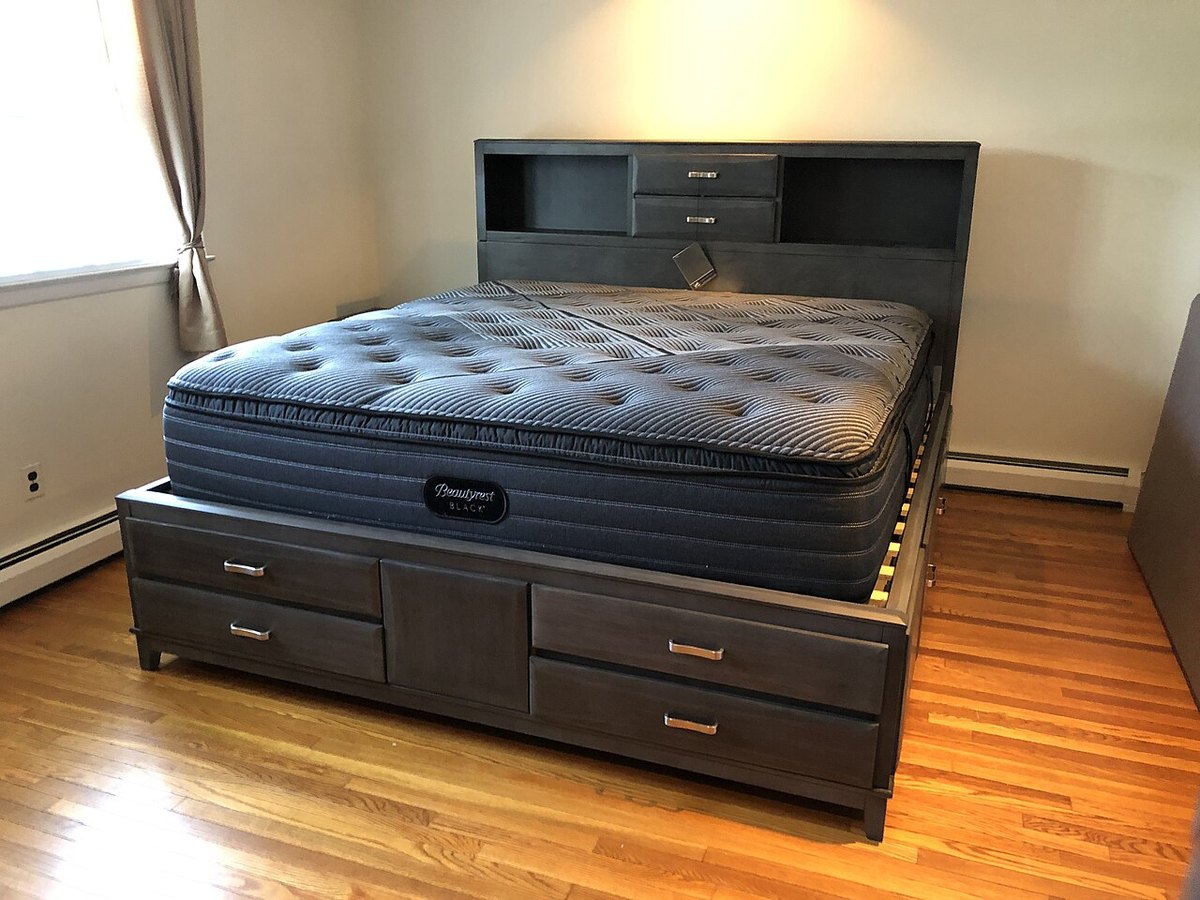
Our head-to-head Saatva vs. Beautyrest testing illustrates a stark contrast in motion damping. The Beautyrest Black utilizes high-mass braided pocket coils wrapped in thick synthetic pockets, reducing accelerometer motion transfer down to an impressive 0.12g. The surface uses phase-change material woven directly into its knit surface, keeping the sleep zone noticeably cold during initial contact. The primary caveat: its 14.5-inch to 15.5-inch builds require dedicated deep-fitted sheets to avoid corner pop-off.
3. Saatva Solaire: Micro-Adjustable Customization
For couples grappling with conflicting sleep ergonomics, standard compromises fail. The Saatva Solaire is engineered specifically for these scenarios, serving as one of our premier recommendations in our guide to the best mattresses for couples with different firmness preferences. Instead of crude 1-to-10 dial ranges, the Solaire incorporates 50 distinct air chamber settings. Unlike older air beds that leave you floating on a hollow balloon, the Solaire anchors its vulcanized air chambers beneath 5-lb density memory foam and a natural Talalay latex comfort pad. Pressure mapping shows a decrease in lumbar gap pressure from 32 mmHg down to an ideal 16 mmHg when dialed precisely to personal anatomy.
4. Tempur-Pedic TEMPUR-Luxe Series: Unmatched Deceleration
The authentic Tempur-Pedic material remains the standard for targeted joint unloading. Our tactile sensors recorded peak shoulder pressure values below 19 mmHg, making it the most therapeutic profile for active hip bursitis and sciatica. Because ultra-dense visco material acts as a thermal insulator, modern iterations include open-cell formulation revisions, though stomach sleepers may find the slow rebound rate creates a sensation of restricted positional shifting.
Practical Luxury Ownership: Foundations, Linens, and Maintenance
Investing in a luxury sleep system requires protecting the environment surrounding the bed. High-end mattresses routinely tip the scales at 110 to 160 pounds in Queen and King configurations. Placing an ultra-premium mattress on inadequate support leads directly to premature core sagging.
Before setting up a luxury profile, review slats, platform beds, box springs & adjustable bases to confirm your base meets structural prerequisites. Wooden slats spaced wider than 3 inches apart will let pocketed springs bulge downward, causing localized uncoupling. Furthermore, understand how to read a mattress warranty; high-end brands often void structural guarantees if middle legs or cross-bracing are missing.
Profile heights also demand physical preparation. Many luxury pillow tops sit between 13 and 16 inches tall. Consult our deep-pocket fitted sheets guide to ensure you acquire linens featuring 16-to-18-inch pocket drops with heavy perimeter elastic banding.
Finally, maximize internal lifespan by adhering to a brand-by-brand mattress rotation schedule. While modern luxury hybrids with zoned toppers should rarely be flipped upside down, an end-to-end 180-degree rotation every 90 days equalizes foam cell compression and prevents persistent body impressions across your primary sleep channels.
The Final Verdict
Luxury is an investment in measurable orthopedic recovery and mechanical endurance. If you prefer the responsive, buoyant uplift of traditional luxury hotels, the Saatva Classic remains the most balanced, durable hybrid value on the market. If your priority is maximum localized pressure relief and profound motion isolation, the dense viscoelastic matrices of Tempur-Pedic or the high-mass wire work of the Beautyrest Black offer unparalleled spinal unloading. And for partners separated by radically different comfort demands, the variable air chambers of the Saatva Solaire deliver an uncompromising dual-zone sleep environment.
Frequently Asked Questions
Does a higher price tag guarantee that a mattress will last longer?
Not automatically, but high-tier pricing often correlates with materials that resist sagging. Look specifically for foam density (above 4.0 lbs/cu.ft. in memory foam; above 1.8 lbs/cu.ft. in polyfoams) and low-gauge steel coils (13 to 14.5 gauge). Avoid models where the cost is driven exclusively by aesthetic detailing rather than verifiable internal specifications.
Why are luxury mattresses so much heavier than standard beds?
High-density memory foams, natural Talalay latex layers, and dual-layer tempered steel innersprings contain substantially more physical raw material by volume than budget, open-cell polyurethane beds. An entry-level queen mattress may weigh 60 pounds, whereas a luxury dual-coil hybrid frequently surpasses 125 pounds.
Do I need a special foundation for a luxury pillow-top mattress?
Yes. Because of their weight and coil density, luxury beds demand rigid, non-yielding support. Ensure your platform bed or foundation has slats spaced no more than 3 inches apart, or use a solid platform surface. Beds over Queen size require a frame with dedicated center-support legs extending directly to the floor to prevent mid-beam bowing.

Jessica Moore, Certified Sleep Science Coach
Jessica has spent 8+ years analyzing biomechanics, pressure relief mapping, and mattress ergonomics. She leads our independent sleep lab in Austin, TX, overseeing thermal, motion, and durability testing.