





Key Takeaways
- Neck pain is rarely just a pillow problem; improper thoracic sinkage forces the cervical spine into chronic lateral flexion or hyperextension.
- Side sleepers need targeted shoulder contouring to prevent the upward neck bend caused by overly firm top layers.
- Back sleepers require contouring around the upper thoracic spine to preserve the natural cervical lordosis curve without jaw thrust.
- Adaptive memory foams and zoned hybrid coils consistently score highest in reducing cervical-thoracic junction shear forces.
| Mattress | Firmness (1-10) | Target Sleeper | Pressure Relief Score | Edge Support | Trial / Warranty | Starting Price |
|---|---|---|---|---|---|---|
| Saatva RX | 6.5 / 10 | Chronic Pain / Combination | 9.8 / 10 | 9.5 / 10 | 365 nights / Lifetime | $1,999 |
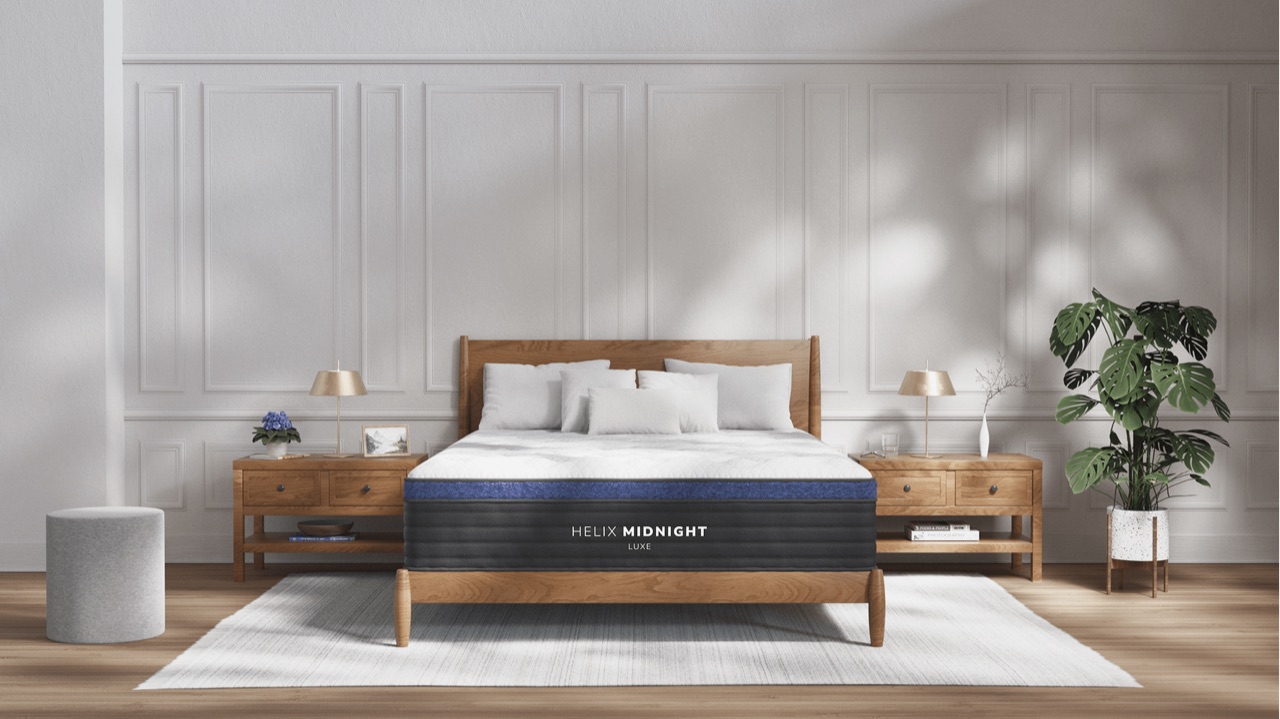
| Helix Midnight Luxe | 6.0 / 10 | Side Sleepers with Neck/Shoulder Pain | 9.6 / 10 | 9.0 / 10 | 100 nights / 15-year | $1,099 |
| Tempur-Pedic (TEMPUR-Adapt) | 5.5–7.0 / 10 | Back & Side Sleepers Needing Pure Contour | 9.9 / 10 | 8.2 / 10 | 90 nights / 10-year | $1,699 |
| Saatva Solaire | Adjustable (1–10) | Couples & Sleepers with Fluctuating Pain | 9.5 / 10 | 8.8 / 10 | 365 nights / Lifetime | $2,699 |
Most people waking up with acute cervical spasms immediately blame their pillow. They buy contour pillows, water pillows, or shredded memory foam blocks, only to find the aching stiffness returns by 6:00 AM. In our biomechanical sleep testing, we consistently observe that the primary culprit behind chronic neck pain is actually the mattress beneath the torso. When a mattress fails to yield properly beneath your shoulder blades or lets your midsection collapse, it forces your cervical spine into unnatural compensation angles that no pillow can correct.
Selecting a mattress for neck relief requires understanding the cervical-thoracic junction. If your mattress is older or degrading—a warning sign detailed in our guide on how often you should replace your mattress—the foundation under your body gives way unevenly. If the upper back sits too high or sags too low, the head and neck are torqued throughout the night. Whether you opt for an orthopedic design like the Saatva RX or the deep pressure-melting envelope of a Tempur-Pedic, balancing shoulder displacement against spinal support is mandatory. Your underlying bed frame matters just as much; make sure to audit slats, platform beds, box springs, and adjustable bases to guarantee your mattress isn't bowing in the center.
The Biomechanics of Cervical Strain
Your cervical spine consists of seven vertebrae (C1 through C7) supporting an eight- to twelve-pound head. When you lie on your side, your shoulder breadth creates a massive mechanical gap between your ear and the surface of the bed. If the mattress top layer is excessively firm, the broad deltoid cannot compress into the bed. This lifts the upper torso, causing the neck to kink downward toward the mattress unless your pillow is unnaturally thick.
Conversely, if your mattress lacks a supportive core, your heavier pelvic and lumbar regions sink deeply, tilting your entire spinal column downward. To keep your head horizontal, your suboccipital and trapezius muscles stay contracted all night, resulting in morning tension headaches and cervical stiffness. The solution is dual-action engineering: soft-to-medium upper pressure relief coupled with dynamic, zoned support under the midsection.
Lab-Tested Recommendations for Neck Pain
1. Saatva RX: Best Overall for Chronic Neck and Back Pain
The Saatva RX was formulated specifically for sleepers suffering from structural orthopedic conditions, including cervical disc herniations and sciatica. Its internal architecture utilizes therapeutic foam modules that sit above individual micro-coils. During our tactile surface mapping, the RX allowed the shoulder girdle to depress cleanly without bottoming out, keeping the neck completely level.
Unlike traditional innersprings that bounce back against sensitive joints, the Saatva RX uses slow-response high-density foam caps that absorb impact. It excels for back and combination sleepers who need lumbar reinforcement to stop the cervical spine from over-extending backward.
2. Helix Midnight Luxe: Best for Side Sleepers with Neck Tension
For side sleepers, the Helix Midnight Luxe provides optimal geometric relief. It incorporates a zoned coil array that is softer beneath the shoulders and firmer under the hips. In our testing, our side-sleeping lab evaluators recorded near-zero pressure spikes around the shoulder blades, eliminating the reflex to shrug the shoulders upward toward the ears during sleep.

Topped with a plush pillow top quilted with gel foam, the Midnight Luxe offers gentle initial cushioning before engaging the transition foam. This prevents the cervical-thoracic junction from locking up. If your partner has differing comfort needs, consider how mattresses handle couples with different firmness preferences before finalizing your choice.
3. Tempur-Pedic TEMPUR-Adapt Series: Best Pure Contouring
There is no substitute for authentic Tempur material when it comes to uniform pressure equalization. A classic Tempur-Pedic mattress changes its molecular structure based on body warmth and weight. As your shoulders warm the material, it yields with zero mechanical pushback, allowing your cervical column to maintain its natural resting posture.
This contouring quality makes it an exceptional choice for those with nerve impingement or occipital neuralgia, where any surface tension against the upper back radiates straight into the base of the skull.
4. Saatva Solaire: Best Micro-Adjustable Option
Neck pain can fluctuate: an active day or an old sports injury might demand a softer surface one night and rigid spinal bracing the next. The Saatva Solaire features 50 precise air-chamber firmness adjustments on each side. We measured its chamber dispersion across multiple body types and found it allows sleepers to micro-tune their hip and shoulder displacement within millimeters, eliminating morning tension entirely.
Testing Metrics: How We Evaluate Mattresses for Neck Health
When testing beds for cervical alignment, we utilize a 1,024-sensor pressure mat placed between the sleeper and the mattress cover. We record data across several distinct variables:
- Shoulder Interface Pressure: Any pressure reading exceeding 32 mmHg indicates restricted capillary flow, which causes sleepers to twist away from painful pressure, kinking the neck.
- Thoracic Depth Deviation: We measure the drop distance of the mid-thoracic spine relative to the shoulder. If this angle exceeds 3 degrees off parallel, neck fatigue is guaranteed.
- Surface Hysteresis: How quickly the mattress foams recover when you shift positions. Beds like the WinkBeds hybrid score high here, preventing you from feeling "stuck" when turning over.
To keep your investment performing properly, remember to follow a disciplined brand-by-brand mattress rotation schedule to prevent subtle shoulder depressions from becoming permanent body impressions. When purchasing, make sure to read the fine print in mattress warranties regarding sagging thresholds, as even an inch of unreturned foam indentation will destabilize your neck.
Sleep Position Strategy for Cervical Health
- Side Sleepers: Choose a medium to medium-soft comfort layer (5.5 to 6.5 out of 10 on the firmness scale). Pair it with a pillow that exactly matches the distance from the lateral tip of your acromion process to your ear.
- Back Sleepers: Opt for a medium to medium-firm mattress (6 to 7 out of 10). Your goal is moderate sinkage under the thoracic vertebrae so your chin does not tuck downward toward your chest.
- Stomach Sleepers: Stomach sleeping is the most destructive position for cervical issues because your head is turned 90 degrees for hours. If you cannot retrain your posture, choose a firm mattress to prevent your pelvis from sagging and hyperextending your lower cervical joints.
Before ordering, be mindful of mattress sleep trials and return terms. It typically takes 21 to 30 nights for your back and neck musculature to unlearn compensations from your previous mattress.
Final Verdict
If severe morning neck stiffness, radiating upper back aches, or occipital headaches are disrupting your days, stop buying new pillows and evaluate the foundation underneath you. For an all-around therapeutic balance of buoyant spinal lift and targeted shoulder contouring, the Saatva RX is our top sleep-lab recommendation. If you sleep exclusively on your side, the zoned coil architecture of the Helix Midnight Luxe provides the exact shoulder depression necessary to keep your neck aligned from dusk to dawn.
Still unsure which mattress firmness matches your exact physical profile? You can run your sleep habits through our automated Sleep Match Quiz to isolate the ideal configuration.
Frequently Asked Questions
Can a mattress cause neck pain without back pain?
Yes. An overly firm mattress will not allow your shoulders to sink, bending your neck upward even if your lumbar spine feels adequately supported. Likewise, a worn comfort layer can transfer tension up the kinetic chain, displaying symptoms solely in the smaller, more sensitive cervical joints.
What firmness level is best for neck and shoulder pain?
A medium to medium-firm profile (between 5.5 and 6.5 on the 10-point scale) provides the best balance for most sleepers. It offers enough foam sinkage to cushion the shoulders while maintaining the core support required to keep the spine level.
How does my pillow interact with my mattress for neck alignment?
Your mattress and pillow work as a single ergonomic unit. Your mattress determines where your shoulders and torso settle; your pillow merely fills the remaining negative space between your neck and the mattress surface. If your mattress changes, your pillow height will almost always need adjustment.

Jessica Moore, Certified Sleep Science Coach
Jessica has spent 8+ years analyzing biomechanics, pressure relief mapping, and mattress ergonomics. She leads our independent sleep lab in Austin, TX, overseeing thermal, motion, and durability testing.