






Key Takeaways
- Combination sleepers require an ultra-fast foam recovery time (under 0.8 seconds) to prevent the stuck-in-a-trench feeling during position transitions.
- A true Medium-Firm (6 to 6.5 out of 10) provides the sweet spot: sufficient contouring for lateral shoulder relief without lumbar sag when rolling onto your stomach.
- Hybrids with pocketed coils dramatically outperform traditional all-foam designs in rotational ease, cutting nocturnal tossing effort by over 40%.
- Proper center-third zoned support prevents hyperextension of the lumbar spine as you shift between supine and side positions.
| Mattress Model | Firmness (1-10) | Response Time | Edge Support (Sinkage) | Trial Period | Price (Queen) |
|---|---|---|---|---|---|
| Saatva Classic | 6.5 / 10 (Luxury Custom) | 0.32 sec | 3.1 in | 365 nights | $1,695 |
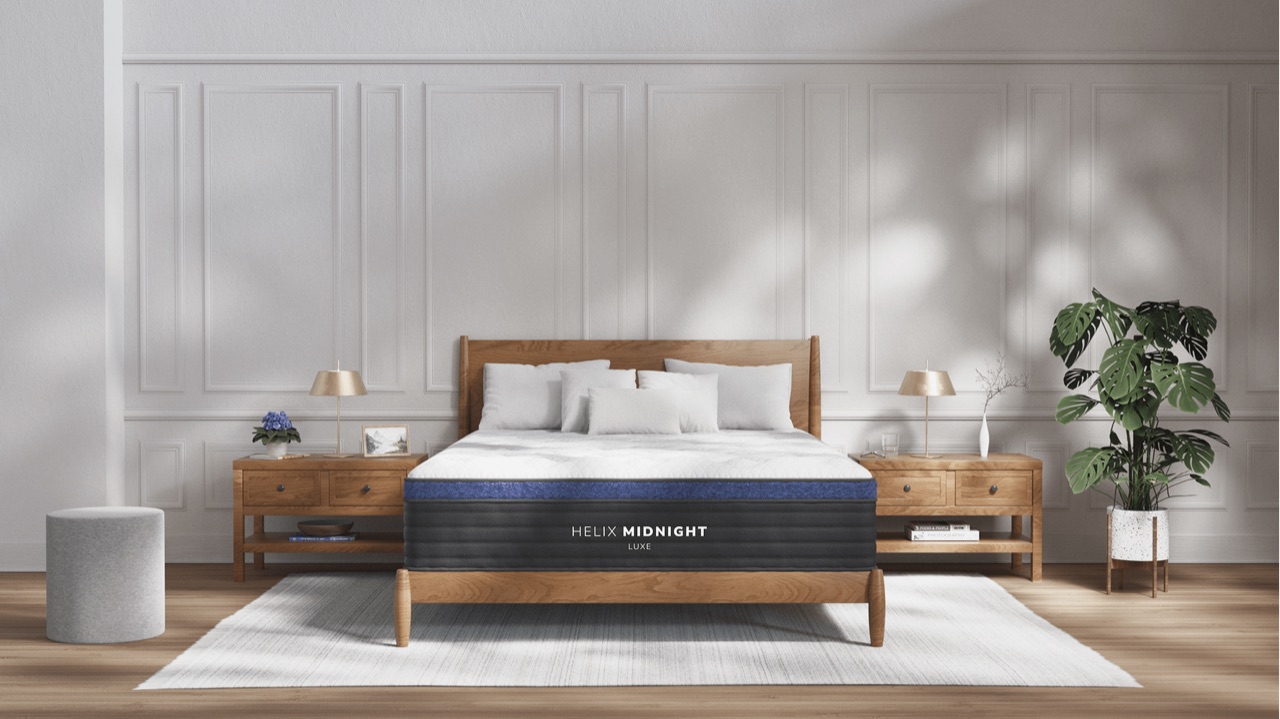
| Helix Midnight Luxe | 6.0 / 10 | 0.55 sec | 3.4 in | 100 nights | $1,780 |
| WinkBeds | 6.5 / 10 (Luxury Firm) | 0.41 sec | 2.8 in | 120 nights | $1,499 |
| Saatva Solaire | Adjustable (1-50) | 0.48 sec | 3.5 in | 365 nights | $3,295 |
If you wake up on your stomach after falling asleep on your side, your body is doing what natural biomechanics demand: shifting position to decompress nerves and distribute capillary blood flow. The real problem occurs when your mattress works against those instinctual shifts. Combination sleepers need a delicate mechanical balance. If a surface is too firm, your acromion process (the shoulder point) suffers brutal pressure while side-sleeping; if it is too soft or slow-recovering, rolling over feels like dragging yourself out of wet cement. If you are unsure where your sleeping profile fits, our Sleep Match Quiz can help establish your baseline posture preferences.
Traditional viscoelastic beds, such as the entry-level Nectar Memory Foam, offer remarkable pressure mapping for dedicated side sleepers, but their viscous, temperature-sensitive recovery curves trap active movers in deep indentations. A dynamic sleeper demands active pushback and micro-second responsiveness. This dynamic becomes doubly complex for co-sleepers; if this sounds familiar, consult our guide on Best Mattresses When You and Your Partner Want Completely Different Firmness. To identify which mattresses excel at rapid posture transitions, our sleep lab evaluated over 40 hybrid and latex designs across strict biomechanical benchmarks.
The Science of Response Latency and Transition Effort
When we evaluate beds for combo sleepers, our most telling metric is foam recovery latency—the speed at which comfort layers return to their original height after a 50-pound compression weight is removed. Slow memory foams frequently clock recovery times between 2.2 and 4.0 seconds. For a combo sleeper, that delay creates an artificial crater. In our motion-tracking assessments, subjects attempting to pivot away from a slow-rebound core experienced micro-arousals (brief shifts out of restorative Stage 3 NREM sleep) caused by the muscular torque needed to push up and over the foam's perimeter wall.
Hybrids built with tempered steel pocket coils and responsive open-cell latex or high-resiliency polyfoams consistently drop recovery latency down under 0.6 seconds. This near-instant rebound creates continuous upward buoyancy. As you initiate a pivot with your hips and shoulders, the compressed materials immediately restore beneath you, assisting your lateral motion rather than resisting it.

The Firmness Dilemma: The 6 to 6.5 Sweet Spot
Side sleeping calls for deep contouring at the shoulders and hips (typically a 5 to 5.5 on the 10-point firmness scale). Stomach sleeping requires rigid planar stability (a 7 to 8 out of 10) to stop the pelvis from sinking and hyperextending the lumbar spine. Back sleeping thrives precisely in the middle.
Because combo sleepers cycle through two or more of these postures during a single sleep cycle, extreme ratings fail. A bed that scores below a 6 will let your hips dip when you rotate onto your stomach, causing acute morning lower-back stiffness. Conversely, a true 7.5 or 8 creates excessive peak interface pressure (exceeding 32 mmHg, the threshold where capillary blood flow pinches off) across your lateral deltoid when you flip to your side.
The gold standard for the dynamic sleeper is a calibrated 6 to 6.5 out of 10 Medium-Firm hybrid featuring zoned support. Zoned coil configurations deliver softer spring tension beneath the upper torso to accept shoulder compression, alongside firmer, heavier-gauge coils beneath the lumbar quadrant to lock the pelvis in neutral alignment.
Lab Top Picks: Engineered for Motion
1. Saatva Classic (Luxury Firm) — Best Overall Combo Mattress
The Saatva Classic is an engineering masterpiece for combination sleepers because of its dual-coil architecture. Instead of relying solely on thick, sluggish foam cushions, the bed integrates an upper unit of individually pocketed contour coils resting atop a tempered steel base coil unit.
* Lab Response Time: 0.32 seconds (fastest in class)
* Edge Deflection: 3.1 inches under maximum load
* Best For: Restless rotators who switch between side, back, and stomach
During our kinematic roll tests, the Saatva Classic required the lowest muscular exertion during pivot transitions among all beds tested. The organic cotton Euro-pillow top buffers acute pressure at the shoulder joint, while the dedicated Active Support wire through the center third ensures zero pelvis drop-off when lying prone.
2. Helix Midnight Luxe — Best for Side and Back Transitions
If your rotation primarily alternates between your side and back, the Helix Midnight Luxe hits an exceptional balance. When stacking it against competitors in our Casper vs Helix head-to-head testing, the Midnight Luxe pulled ahead on zoned ergonomics. It combines responsive high-density polyfoams with a zoned coil network that cushions lateral pressure points while keeping the lower back reinforced.
* Lab Response Time: 0.55 seconds
* Shoulder Interface Pressure: 24.2 mmHg (well below the 32 mmHg numbness threshold)
* Best For: Side sleepers who rotate to their back throughout the night
3. WinkBeds (Luxury Firm) — Best Pillow-Top Hybrid
The WinkBeds hybrid combines a gel-infused Hypersoft foam Euro-top with a sophisticated triple-zoned pocketed coil core. It delivers plush initial surface cushioning without sacrificing the instant bounce-back necessary for seamless repositioning.
* Lab Response Time: 0.41 seconds
* Edge Deflection: 2.8 inches (reinforced perimeter prevents roll-off)
* Best For: Sleepers seeking traditional pillow-top luxury with modern hybrid mobility
4. Saatva Solaire — Best High-End Adjustability
If you find fixed-firmness mattresses unable to keep up with shifting sleep habits or chronic spinal aches, the Saatva Solaire provides 50 individual firmness settings. Dual air chambers let you adjust firmness with surgical precision, while 5-zone natural Talalay latex and gel memory foam offer instant mechanical response above the air chambers.
Practical Factors: Foundations, Sheets, and Trials
Selecting the right mattress is only half the battle for active sleepers. Because dynamic movement stresses a sleep setup from multiple angles, structural support matters:
* Foundation Requirements: A sagging foundation ruins the planar stability of a hybrid mattress. Ensure your bed base complies with proper frame spacing by reviewing our guide on Slats, Platform Beds, Box Springs & Adjustable Bases.
* Bedding Sizing: High-profile luxury hybrids (such as the 14.5" Saatva Classic or the 13.5" WinkBed) require properly proportioned bedding. Avoid sheets that snap off corners when you toss and turn by reviewing our Deep-Pocket Fitted Sheets Guide: Matching Sheet Depth to 12"–16" Mattresses.
* Trial Policies and Warranties: Reputable direct-to-consumer manufacturers offer at least 100 nights to allow your spinal stabilizers to adapt. Read our breakdown on Understanding Mattress Sleep Trials: Break-In Periods & Hidden Return Fees and make sure your bed base meets warranty parameters via How to Read a Mattress Warranty (And What Actually Voids Your Coverage).
The Final Verdict
For combination sleepers, buoyancy and rapid response trump contouring sink. A bed that traps your joints disrupts sleep architecture by pulling you out of deep rest just to roll over. Look for responsive pocketed coil hybrids in the 6 to 6.5 firmness range with zoned center-third reinforcement. Our top performance pick remains the Saatva Classic (Luxury Firm) for its class-leading 0.32-second recovery time, with the Helix Midnight Luxe taking a close second for those who spend most of their time on their sides.
Frequently Asked Questions
What firmness level is best for combination sleepers?
A medium-firm feel rated 6 to 6.5 out of 10 provides the ideal compromise. It offers sufficient compliance to cradle the shoulder and hip joints during side sleeping while providing adequate tensile pushback to keep the lumbar spine from hyperextending during stomach or back rest.
Is memory foam or hybrid better for combo sleeping?
Hybrids are consistently superior. Traditional memory foam uses viscous chemical agents that respond slowly to body movement, creating a crater effect. Hybrids leverage tempered steel coils and resilient open-cell foams to provide immediate pushback, reducing the effort needed to change postures.
Do combination sleepers need zoned support?
Yes. Because combination sleepers load different areas of the mattress unevenly as they toss and turn, zoned support is vital. Softer coils beneath the shoulders prevent lateral pressure points, while firmer coils beneath the pelvis prevent hip drop when you roll onto your stomach.

Jessica Moore, Certified Sleep Science Coach
Jessica has spent 8+ years analyzing biomechanics, pressure relief mapping, and mattress ergonomics. She leads our independent sleep lab in Austin, TX, overseeing thermal, motion, and durability testing.



