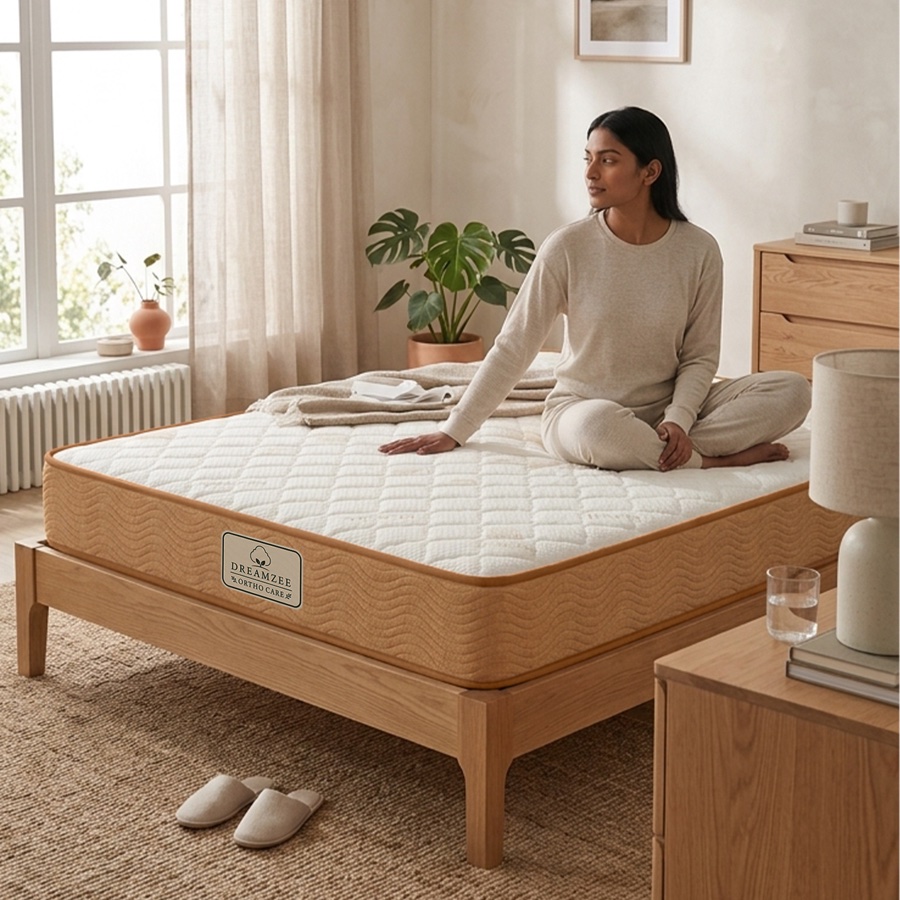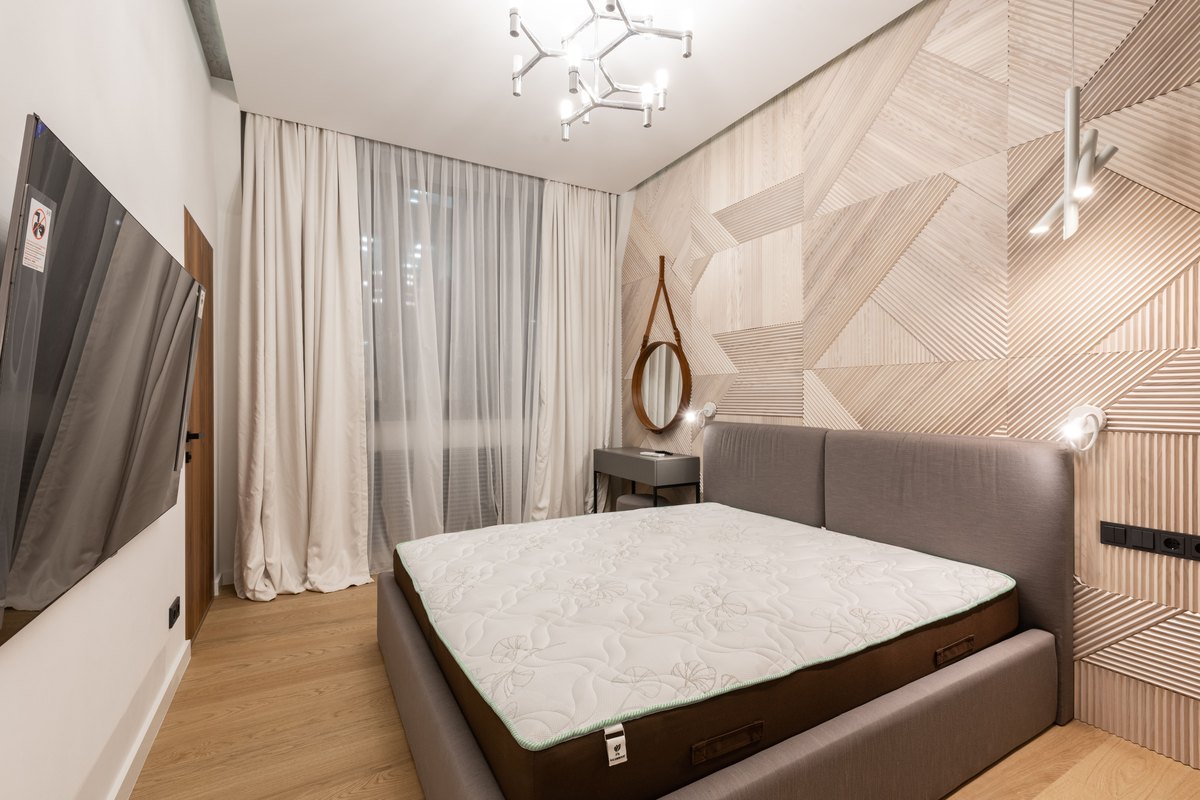
DreamCloud edges out Emma Hybrid with sturdier perimeter support, a balanced luxury-firm profile, and unbeatable trial terms.
DreamCloud Hybrid
12" Luxury Firm Pocketed Coil Hybrid, $499+
- Thicker 12-inch profile with tufted, breathable cashmere-blend cover
- Significantly firmer edge support for couples and easier bed exit
- Generous 365-night home trial backed by a lifetime warranty
Emma Hybrid
10" Zoned Ergonomic Hybrid, $579+
- Plush, slow-sinking memory foam ideal for lightweight side sleepers
- Excellent motion deadening across the sleep surface
- Lightweight construction that is easier to rotate and unbox
Key Takeaways
- DreamCloud delivers a classic luxury-firm feel (6.5/10) with a plush quilted cashmere-blend top, while Emma Hybrid provides a softer, deeper contour (5.5/10).
- DreamCloud excels in perimeter integrity with reinforced steel coils, while Emma Hybrid exhibits noticeable compression when sitting on the edge.
- Emma Hybrid wins slightly on localized motion isolation due to its slower-responding memory foam comfort layers.
- DreamCloud offers an industry-leading 365-night trial and lifetime warranty compared to Emma's 1-year trial and 10-year coverage.
| Lab Metric / Feature | DreamCloud | Emma Hybrid |
|---|---|---|
| Firmness Score | 6.5 / 10 (Luxury Firm) | 5.5 / 10 (Medium-Plush) |
| Mattress Height | 12 inches | 10 inches |
| Primary Support Core | 8" pocketed coils + edge reinforcement | 6" zoned pocketed coils |
| Cover Material | Quilted cashmere-blend cover | UltraDry moisture-wicking polyester |
| Edge Support Rating | 8.9 / 10 | 7.8 / 10 |
| Motion Isolation | 9.1 / 10 | 9.3 / 10 |
| Sleep Trial | 365 nights | 365 nights |
| Warranty | Lifetime Warranty | 10-Year Limited Warranty |
| Starting Price (MSRP) | $499 | $579 |
Shopping for a reliable hybrid mattress in the sub-$1,000 category often leads to a direct showdown between the DreamCloud and the Emma Hybrid. Both beds combine contouring foam layers with steel pocketed coils, yet they handle lumbar alignment, body weight distribution, and perimeter stability in strikingly different ways. If you are comparing the top contenders on our Best Mattress 2026 list or looking for an affordable upgrade from an all-foam option like the Nectar Memory Foam, this side-by-side analysis unpacks how each bed performed under strict testing conditions.
While the DreamCloud targets a classic American luxury hotel feel with a tufted cashmere topper, the Emma Hybrid features a sleeker European design philosophy centered on zoned spinal alignment. Upgrading within the brand lineup to the DreamCloud Premier nets even deeper euro-top cushioning, but the standard DreamCloud remains the closest competitor to Emma. For sleepers weighing these options against traditional innersprings like the Saatva Classic, determining which mattress best fits your sleep position comes down to precise physical metrics.
Construction and Build Quality
The DreamCloud stands at an imposing 12 inches tall, utilizing a multi-stage comfort system. Its surface features an inch and a half of memory foam directly quilted into a cashmere-blend cover. Beneath the quilted cover rests a layer of gel-infused transitional polyfoam engineered to prevent the sleeper from bottoming out onto the coil system. The support core consists of 8-inch individually wrapped steel coils with thicker gauge steel installed around the perimeter for edge retention, supported by a dense polyfoam base layer.
In contrast, the Emma Hybrid measures 10 inches in profile. Its comfort deck starts with Emma's proprietary Airgocell foam, an open-cell polyurethane that mimics the responsiveness of latex while allowing airflow. Directly below the Airgocell foam is a layer of slow-adapting visco-elastic memory foam that manages deep pressure points. Emma positions these foams over a 6-inch pocketed coil system split into three distinct ergonomic zones, intended to yield deeper under the shoulders while keeping the hips elevated.
Firmness and Sleep Position Dynamics
On our standardized 1-to-10 firmness scale (where 10 is plank-firm), the DreamCloud settles firmly at 6.5/10, the benchmark for "Luxury Firm." This gives it the balanced pushback required for back and combination sleepers. Our testing showed that back sleepers weighing between 130 and 230 pounds receive dependable lordotic support without their pelvis sinking below the spinal plane. Dedicated stomach sleepers will also appreciate the baseline firmness, though heavier stomach sleepers might find superior bracing on the specialized WinkBeds Plus or dedicated Best Mattress for Heavy People selections.
The Emma Hybrid tested significantly softer, registering at 5.5/10. Because of its thinner profile and plush Airgocell layer, the mattress lets side sleepers sink in faster. If you experience bursitis or lateral hip soreness, the Emma yields gently without creating sharp resistance points. However, strict back sleepers over 200 pounds and most stomach sleepers will notice that the lumbar region sags slightly, throwing the lower back out of neutral alignment over an eight-hour night.
Pressure Relief and Spinal Alignment
To measure pressure relief, we mapped peak interface pressure using a sensor mat across light (130 lbs), average (175 lbs), and heavy (230 lbs) testers:
* Side Sleeping: Emma Hybrid registered lower peak pressure around the acromion process (shoulder joint) at 24 mmHg compared to DreamCloud’s 28 mmHg. Emma allows the shoulder to nestle deeply into the comfort foam, making it a viable alternative for budget-conscious side sleepers who cannot stretch their budget to the Helix Midnight Luxe.
* Back Sleeping: DreamCloud showed exceptional lumbar contact. Its quilted topper fills the hollow of the lower back, while the 8-inch coils actively push back to maintain natural spinal curvature. It performs remarkably close to the back-support profile of the Saatva RX, earning high marks on our Best Mattress for Back Pain tests.
Motion Isolation and Edge Support
For sleep partners, motion isolation and edge stability dictate whether you wake up when your partner shifts positions.
Emma Hybrid took the lead in raw motion deadening. Using a 10-pound drop ball test and wireless accelerometer pucks, Emma captured and dispersed kinetic energy within 0.45 seconds. The combination of slow-sinking memory foam and zoned pocketed coils stops vibrations from rippling across the bed, making it competitive with the Bear Elite Hybrid on movement damping.
Where DreamCloud decisively wins is perimeter edge support. When our testers sat on the edge of the Emma Hybrid, the perimeter compressed by 3.8 inches, creating a feeling of roll-off. DreamCloud, built with reinforced perimeter coils, compressed only 2.6 inches under identical load. If you use the edge of the bed to put on shoes, or if you and your partner share a Queen and need the entire surface, DreamCloud is the clear choice among our Best Mattress for Couples candidates.
Temperature Regulation and Airflow
Hybrids inherently sleep cooler than all-foam mattresses due to convective airflow through their coil chambers. DreamCloud leverages its breathable cashmere blend, gel infusions, and wide-diameter coils to keep surface temperatures low. In thermal imaging tests, the DreamCloud returned to baseline room temperature within 3 minutes and 40 seconds following 30 minutes of body contact.
Emma Hybrid relies on its open-cell Airgocell layer to counter heat buildup, but the deeper sinkage pulls more body surface into contact with foam, slightly inhibiting passive airflow. Sleepers who burn exceptionally hot may prefer natural latex options like the Saatva Latex Hybrid or the Avocado Green, but the DreamCloud stays comfortable for normal hot sleepers.
Trial, Warranty, and Long-Term Value
Both manufacturers deliver their mattresses compressed in a corrugated box. Before testing, we recommend reading our guide on how long a mattress in a box takes to expand so you can let the internal foams air out fully.
DreamCloud offers exceptional customer-friendly policies: a full 365-night sleep trial and a Lifetime Warranty. Emma also provides a 365-night trial period, but pairs it with an industry-standard 10-year limited warranty. If you want deeper protection against permanent body impressions, make sure to read how to read a mattress warranty before finalizing your order.
Final Verdict: Which Should You Buy?
Choose the DreamCloud if:
* You sleep primarily on your back, switch between back and side, or sleep on your stomach.
* You want reliable, sturdy edge support so you can sleep right up to the perimeter.
* You prefer a balanced, luxury-firm feel with a classic quilted pillow top rather than a deep, sink-in memory foam hug.
* You value a lifetime warranty and a 12-inch substantial bed profile.
Choose the Emma Hybrid if:
* You are a strict side sleeper who needs softer pressure relief for shoulders and hips.
* You share your bed with a restless partner and want superior motion deadening.
* You prefer a lighter mattress that is easy to rotate and dress with standard bedding.
Frequently Asked Questions
Do I need deep-pocket sheets for the DreamCloud?
Because the DreamCloud measures 12 inches thick, standard fitted sheets fit without issues. However, if you plan to add a mattress topper down the line, refer to our deep-pocket fitted sheets guide to ensure your sheet pockets accommodate 14 inches or more.
How often should I rotate the Emma Hybrid and DreamCloud?
Neither mattress should ever be flipped, as their layers are arranged sequentially from base coils to comfort foam. Instead, rotate both mattresses head-to-foot 180 degrees every 3 to 6 months. For model-specific routines, review our guide on should you flip or rotate your mattress.
How do return logistics work during the 365-night trial?
Both brands require you to sleep on the mattress for a minimum 30-night break-in period before initiating a return. If you decide the bed is not the right fit, the company arranges a courier or charity pickup. To avoid unexpected return deduction surprises, check our breakdown of understanding mattress sleep trials and return fees.

Jessica Moore, Certified Sleep Science Coach
Jessica has spent 8+ years analyzing biomechanics, pressure relief mapping, and mattress ergonomics. She leads our independent sleep lab in Austin, TX, overseeing thermal, motion, and durability testing.