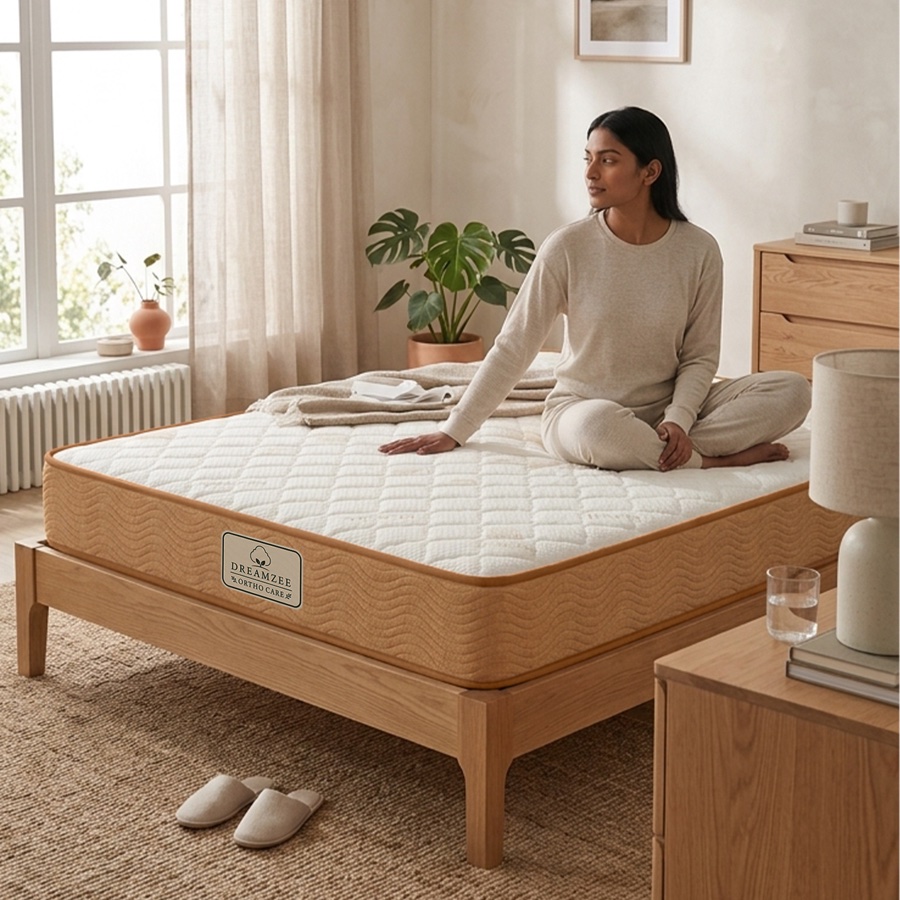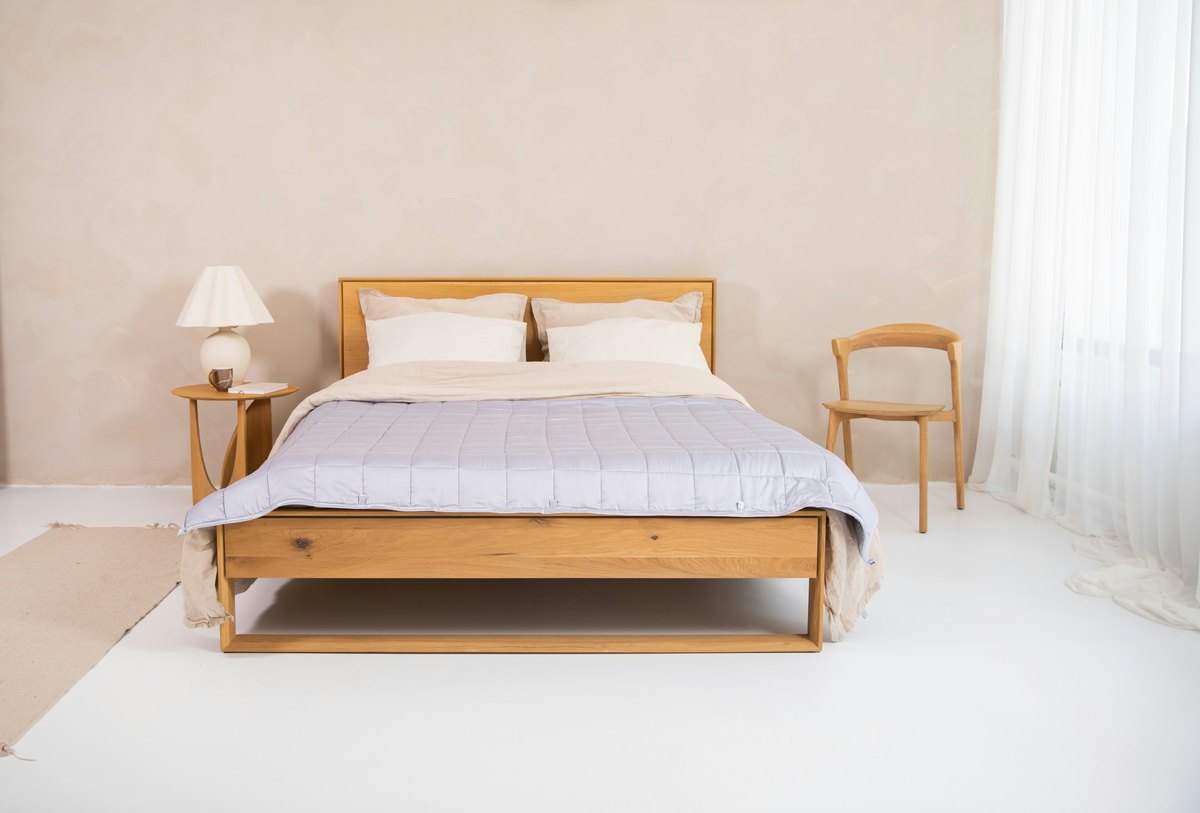
Key Takeaways
- Never flip a single-sided mattress: Modern hybrids and pillow-tops place support coils at the base; flipping places you directly on rigid foundational foam or steel springs.
- Rotate 180 degrees every 3 to 6 months: Head-to-toe rotation distributes body impressions evenly across comfort layers, preventing premature middle-sag.
- Dual-sided beds are the true exception: Models engineered specifically with dual firmness require both flipping and rotating to access different comfort profiles.
- Smart beds and zoned airbeds stay fixed: Mattresses with internal mechanical chambers or directional spinal zones should never be rotated or inverted.
For decades, Saturday morning spring cleaning meant flipping your mattress upside down. Traditional innerspring beds featured symmetrical builds with wire coils sandwiched between twin layers of cotton felt, batting, and quilted covers. If one side started to dip under your hip weight, turning it upside down gave the compressed padding a chance to rest while you broke in the fresh underside.
Today, that maintenance ritual will ruin your sleep. Modern mattress architecture has evolved radically, as we see in our Memory Foam vs. Hybrid Mattresses: Complete Sleep Lab Breakdown. Almost all modern beds—including premier innersprings like the Saatva Classic and models dominating our Best Mattress 2026 awards—are engineered strictly from the bottom up. Even plush euro-top hybrids like the Helix Midnight Luxe feature dedicated base support systems that should never face upward.
Understanding the mechanical differences between flipping and rotating is the single easiest way to protect your investment and preserve spinal alignment.
The Engineering of One-Sided Mattresses
Traditional mattresses were double-sided because basic open coils and low-density cotton batting deteriorated rapidly without constant alternation. Modern mattresses use graduated, unidirectional density layering.
At the structural base, manufacturers install high-density polyfoam (typically 1.8 to 2.0 lb/ft³) or pocketed tempered steel coils engineered solely for foundational stability. Above that sits a transitional dampener layer, topped by pressure-relieving memory foam, ventilated latex, or a micro-coil euro-top.
If you flip an asymmetrical pillow-top mattress upside down:
- You sleep on bare foundation materials: Base foam has an Indentation Load Deflection (ILD) rating upwards of 35 to 45, offering zero contouring. Steel coil scrims will dig directly into pressure points.
- You crush delicate comfort materials: High-end memory foams and natural latex are designed to respond to human body heat and point elasticity. Crushing them beneath the entire weight of your mattress core causes premature structural failure.
- You trigger alignment issues: Sleeping on unyielding base foam fails to cushion your shoulders and pelvic girdle, frequently causing hip pain from your mattress being too hard or unnatural lower spine extension.
Unless a mattress is explicitly marketed as "dual-sided" or "flippable," it is built exclusively to be used one-side up.
Why 180-Degree Rotation Is Mandatory
While flipping a standard mattress is a mistake, failing to rotate it head-to-toe creates an equally serious problem: localized foam fatigue.
When you sleep, roughly 60% of your total body mass rests across your pelvic region, with another significant concentration at your shoulder blades. Night after night, the polyurethane, memory foam, or latex comfort layers beneath your torso compress repeatedly under moisture, body warmth, and dynamic motion. Over several months, micro-voids in open-cell foams fatigue, losing their rate of rebound.
From the Sleep Lab: In our cyclical load durability tests, non-rotated comfort layers show measurable indentation depths up to 40% faster than foams subjected to alternating pressure zones. A simple 180-degree rotation moves compressed hip zones to the foot of the bed, where light calf and foot weight allows the cellular structure to equilibrate.
Rotating your mattress 180 degrees every 3 to 6 months ensures foam wear distributes evenly across the entire surface plane. This prevents deep body impressions from forming before the 1.5-inch mark that defines structural warranty defects.
The True Flippable Exceptions: Dual-Firmness Beds
A small class of contemporary mattresses is genuinely engineered to be flipped. These models use a central supportive core flanked by two distinct comfort decks, usually offering two different firmness levels in one casing.
- Dual-Firmness Memory Foam: The Layla mattress features a supportive core with a plush 3-inch copper-gel memory foam layer on one side (a 4 out of 10 on the firmness scale) and a firm 1-inch foam layer on the reverse (a 7 out of 10). Here, flipping is the primary mechanism for changing your firmness level.
- Ultra-Firm Orthopedic Builds: The Brooklyn Bedding Plank provides an ultra-rigid flat profile on one face and a standard firm on the other. This flippable profile is particularly useful for back and stomach sleepers trying to prevent lumbar collapse, reinforcing why stomach sleepers need firmer support.
- Natural Dual-Sided Latex: Beds like the Zenhaven utilize a solid botanical latex core engineered with different pin-core hole distributions on each side, allowing sleepers to switch between "Luxury Plush" and "Gentle Firm" simply by inverting the mattress.
For these flippable designs, proper maintenance means alternating between flipping and 180-degree rotations to balance wear across both surfaces.
Brand-by-Brand Maintenance Schedules
| Mattress Model / Type | Can You Flip It? | Rotation Protocol | Optimal Frequency |
|---|---|---|---|
| Saatva Classic (Innerspring Hybrid) | No | 180° Head-to-Toe | Every 3 to 6 months |
| Helix Midnight Luxe (Pillow-Top Hybrid) | No | 180° Head-to-Toe | Every 3 to 6 months |
| Layla Memory Foam (Dual-Sided) | Yes | Flip & Rotate | Flip as desired; rotate every 3 months |
| Brooklyn Bedding Plank (Dual-Sided Firm) | Yes | Flip & Rotate | Flip as desired; rotate every 3 months |
| WinkBeds Plus (Heavy-Duty Hybrid) | No | 180° Head-to-Toe | Every 2 to 3 months |
| Saatva Solaire (Adjustable Airbed) | Never | Do Not Rotate | Fixed positioning (air valves/pumps) |
| Zenhaven (All-Latex Flippable) | Yes | Flip & Rotate | Flip as desired; rotate every 6 months |
Certain adjustable airbeds like the Saatva Solaire are strict exceptions to all rotation rules. Because internal air chambers, motorized pumps, and power conduits are arranged to align with your specific body zones, rotating or flipping the core will reverse lumbar chamber placement and damage internal hoses.
Weight Considerations and Foam Fatigue
Maintenance intervals should be tailored to sleeping weight. Sleepers weighing over 230 pounds place significantly higher compression stress on edge encasements and transition foams.
If you are sleeping on a reinforced construction like the WinkBeds Plus or a specialized option from our Best Mattress for Heavy People guide, rotate the bed every 60 to 90 days during the first year of ownership. This early-stage rotation ensures the high-density polyfoams and heavier-gauge coil perimeters break in evenly, preserving neutral spinal support and preventing the deep center dip that undermines the best mattress types for lower back pain.
A Safe 4-Step Mattress Rotation Checklist
Modern queen and king mattresses often weigh between 90 and 150 pounds. Rotating them incorrectly can damage the internal coil perimeter or cause back strain.
- Strip bedding and clear nightstands: Remove all sheets, pillows, and mattress protectors. Clear nightstands of lamps, water glasses, or delicate items that might get bumped.
- Orient with the room space: Pull the mattress a few inches away from the headboard to allow clearance at the corners.
- Use fabric handles only for positioning: Side handles are designed to adjust mattress position on the foundation, not to carry the mattress's full deadweight across a room. Lift from the lower base deck when shifting.
- Rotate in a smooth clockwise arc: Rotate the bed 90 degrees so it rests perpendicular to your bed frame, then complete the full 180-degree swing until the head section aligns cleanly with the footboard.
Frequently Asked Questions
How can I tell if my mattress is flippable or one-sided?
Look at the top and bottom covers. A single-sided mattress features a distinctive aesthetic split: a soft, plush, or quilted sleeping surface on top, with a heavy-duty, coarse, anti-slip fabric on the base. A flippable mattress will have sleeping fabrics, quilting, and edge taping finished symmetrically on both sides.
Can rotating a mattress fix an existing sag?
No. Rotating a mattress redistributes dynamic pressure to slow down future wear; it cannot restore polyfoam that has already undergone structural shear or spring units that have lost tensile strength. If your mattress has developed a permanent depression greater than 1.5 inches, the comfort materials have degraded and the mattress must be replaced.
Does failing to rotate my mattress void the warranty?
In many cases, yes. Most manufacturer warranties explicitly require evidence of proper support foundations and routine maintenance rotations. If a mattress develops premature structural dips because it was never rotated 180 degrees over multiple years of use, warranty claims can be legally rejected under standard wear-and-tear clauses.

Jessica Moore, Certified Sleep Science Coach
Jessica has spent 8+ years analyzing biomechanics, pressure relief mapping, and mattress ergonomics. She leads our independent sleep lab in Austin, TX, overseeing thermal, motion, and durability testing.