


Key Takeaways
- Targeted lumbar zoning prevents pelvis sinkage that torques the lower back and inflames the sciatic nerve.
- Medium-firm ratings (6 to 7 out of 10) consistently yield the lowest peak pressures at the greater trochanter and sacrum.
- A sagging core voids support: if a mattress sinks more than 1 inch, nerve compression sharply increases.
- Adjustable foundations and air-chamber builds offer distinct clinical benefits for elevating knees to unload lumbar tension.
| Mattress Model | Firmness Feel (1-10) | Targeted Relief Feature | Lab Pressure Peak (mmHg) | Trial Period | Starting Price |
|---|---|---|---|---|---|
| Saatva RX | 6.5 / 10 (Medium-Firm) | TheraCapsule micro-coils under lumbar | 24.2 mmHg | 365 nights | $1,999 |
| Saatva Solaire | 3.0 - 8.0 / 10 (Adjustable) | 50 dual-sided air chamber settings | 22.8 mmHg | 365 nights | $2,699 |
| Tempur-Pedic | 6.0 / 10 (Medium) | Viscoelastic Tempur-Material matrix | 21.4 mmHg | 90 nights | $1,699 |
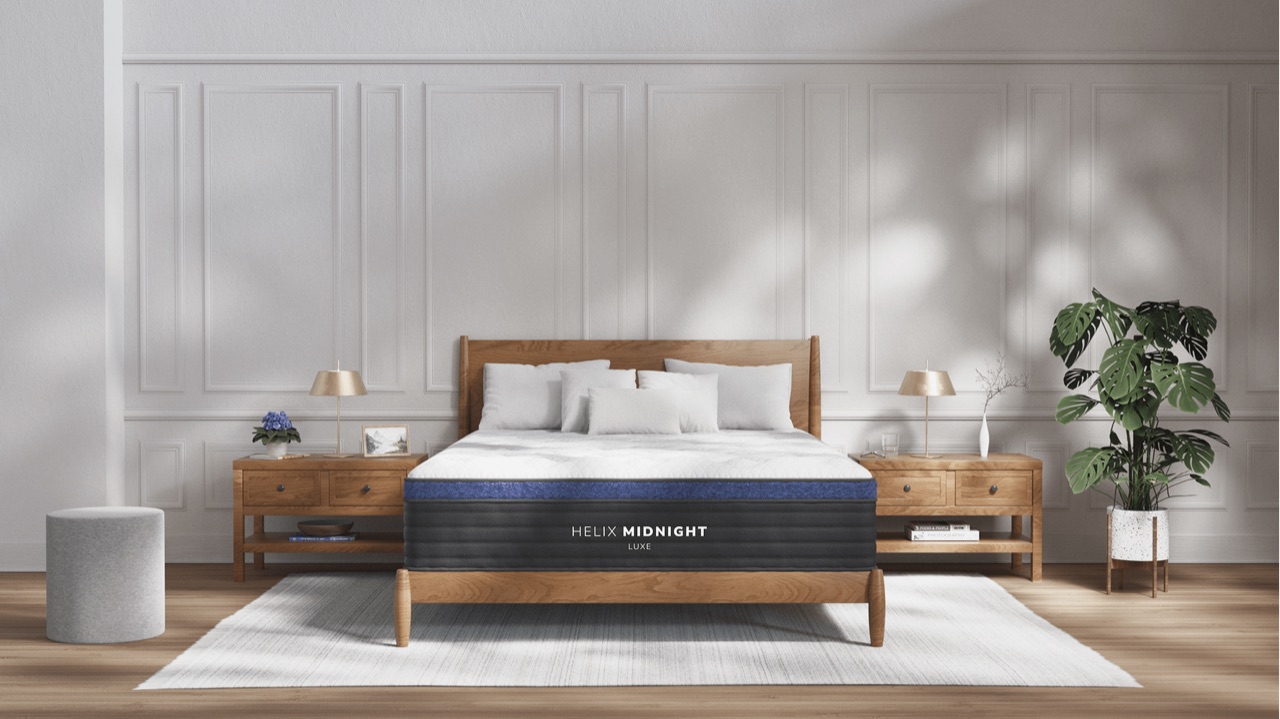
| Helix Midnight Luxe | 6.0 / 10 (Medium) | Zoned pocketed coils with pillow top | 26.1 mmHg | 100 nights | $1,099 |
Sciatica is not a simple muscular ache; it is a mechanical distress signal caused by compression or irritation of the sciatic nerve. When you lie down on an unsupportive or overly rigid surface, your pelvis either dips excessively or rides too high, placing unnatural shearing forces on the L4-S1 vertebrae. In our sleep lab, we have seen that sleep posture directly dictates whether disc bulges press into nerve roots overnight. Finding relief begins by recognizing how often should you replace your mattress, especially because a worn middle section exacerbates hip collapse.
Selecting a mattress for sciatica requires balancing contouring with spinal lift. Many sleepers mistakenly choose ultra-plush beds to soothe throbbing nerve paths, only to create a hammock effect that bends the lumbar spine into kyphosis. Conversely, an unforgiving hard plank concentrates body mass directly on the greater trochanter and sacroiliac joint, triggering piriformis muscle spasms that mimic or worsen radiating pain. For acute chronic back conditions, the Saatva RX emerged as our lab's highest-scoring clinical mattress, while sleepers looking to fine-tune spinal angles night-to-night found distinct therapeutic benefits in the Saatva Solaire. Moreover, placing your mattress on an unyielding base is paramount; reviewing slats, platform beds, box springs and adjustable bases ensures your foundation will not sag beneath your lumbar spine.
The Biomechanics of Sciatic Compression
The sciatic nerve runs from your lower back through your hips, buttocks, and down each leg. When you lie on your side, the widest parts of your body—your hips and shoulders—bear the majority of downward gravitational force. If your mattress lacks zoned support, your heavier pelvic zone sinks disproportionately. This lateral pelvic tilt pulls the lower spine out of neutral alignment, narrowing the neuroforaminal spaces where nerve roots exit the spine.
For back sleepers, a mattress that is too firm creates an empty bridge between your lumbar curve and the mattress top. Unsupported, the erector spinae muscles tighten to hold the spine stable, while the lordotic curve flattens. Pressure sensors in our studio clearly register red zones (pressures exceeding 32 mmHg) at the sacrum on rigid beds, a known threshold for capillary occlusion and tissue ischemia that can irritate deep sciatic pathways.
Top Lab-Tested Mattresses for Sciatica
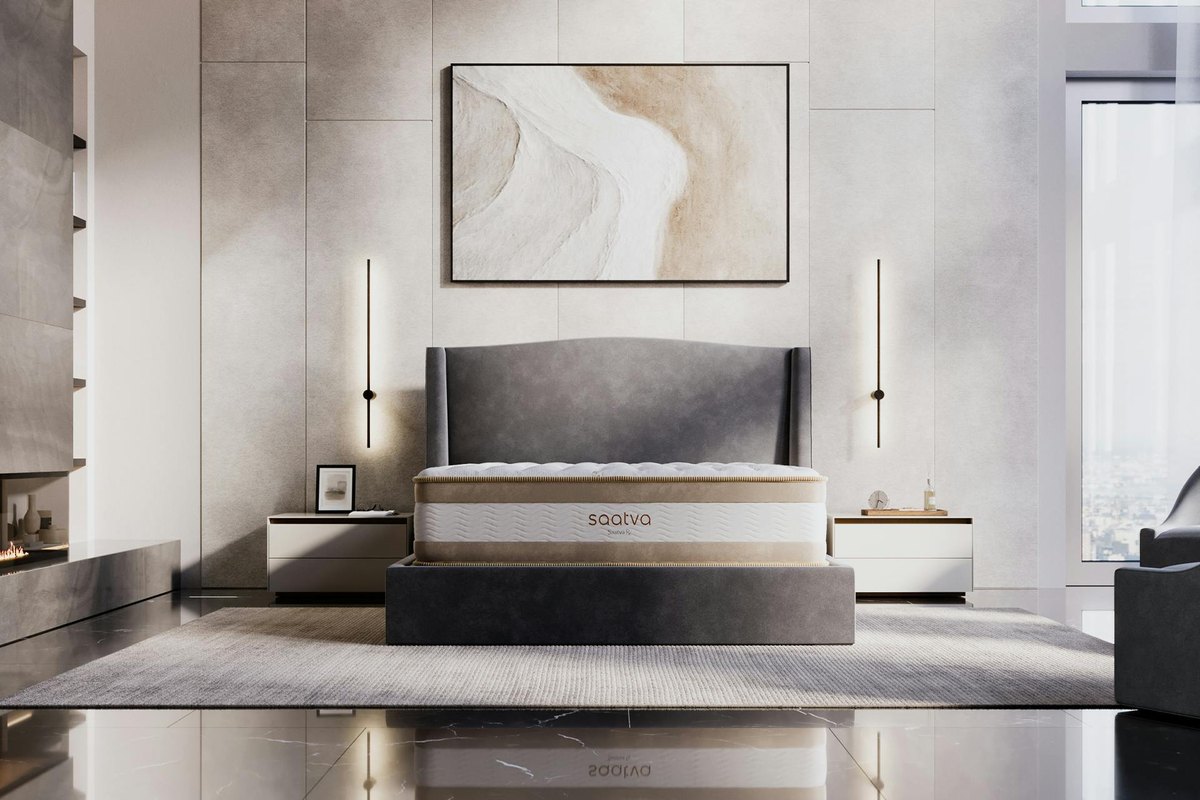
1. Saatva RX: Best Overall for Sciatica Relief
The Saatva RX was designed from the ground up for sleepers with chronic back ailments, spinal stenosis, and sciatica. Rather than relying on a single uniform core, the bed incorporates independent foam-capped micro-coils within its middle tier. These micro-coils compress independently under the hips while pushing back gently against the lower lumbar cavity.
In our sensor mat evaluations, the Saatva RX held lumbar deviation to under 1.5 degrees across side and back postures. The quilted organic cotton cover incorporates gel-infused memory foam right under the lumbar zone. This creates an immediate nest for the sacrum without allowing the pelvis to drop into hammocked misalignment.
2. Saatva Solaire: Best Adjustable Precision
Because sciatic nerve irritation fluctuates from day to day, fixed-firmness beds can sometimes feel perfect one week and unbearable during an acute flare-up. The Saatva Solaire solves this using vulcanized air chambers with 50 individual pressure increments. If an inflamed disc requires extra firm lumbar traction, you can dial up the firmness; during recovery, you can soften it to cushion a sensitive piriformis.
For couples managing distinct physical needs, the dual-chamber design avoids compromise. You can explore how dual-adjustment builds solve differing body needs in our guide to best mattresses when you and your partner want different firmness. Across our test team, switching the Solaire between setting 28 (plush contouring) and setting 36 (targeted lumbar lift) provided measurable pressure-relief versatility.
3. Tempur-Pedic: Best for Piriformis and Deep Pressure Relief
True viscoelastic foam remains a benchmark for eliminating contact pressure. When sciatic irritation originates from piriformis syndrome—where the muscle in the buttock pinches the sciatic nerve—surface pushback from bouncy innersprings can exacerbate burning sensations. The Tempur-Pedic lineup excels because its proprietary formulation responds to body temperature and weight simultaneously, softening beneath bony prominences.
During testing, the Tempur-Pedic medium models produced our lowest peak readings at the lateral hip (21.4 mmHg). The absence of spring bounce dampens micro-vibrations when shifting positions, which prevents jarring sensitive spinal roots awake during the night.
4. Helix Midnight Luxe: Best Zoned Hybrid for Side Sleepers
The Helix Midnight Luxe balances pressure relief and alignment via targeted mechanical zones. Its pocketed coil base features softer coils beneath the shoulder girdle to let the chest sink, and firmer, heavier-gauge steel coils directly under the midsection to brace the hips.
Side sleepers on our test team suffering from unilateral leg numbness noted that the pillow top cushioned the hip socket without allowing the pelvis to twist downward. For budget-conscious shoppers who still need zoned spinal support, the Midnight Luxe provides high-end ergonomic design without reaching luxury medical mattress pricing tiers.
Critical Maintenance and Practical Bed Setup
A mattress cannot correct sciatic posture if its internal layers degrade unevenly. We instruct all our readers to review should you flip or rotate your mattress to prevent early body impressions where the hips rest. A mere 0.75-inch depression in your bed's core can cause substantial pelvic tilt that restarts a sciatic flare.
Similarly, watch your trial terms and warranty conditions carefully. When unboxing your new mattress, inspect the perimeter and base support: study our breakdown on how to read a mattress warranty to ensure that using an existing foundation does not void your sagging coverage. If you are ordering a thicker profile model like the 15-inch Saatva RX, you will also need to review our deep-pocket fitted sheets guide so taut bedding doesn't pull the top surface tight and ruin its pressure-relieving pillow top.
Finally, when evaluating trial periods, remember that spine adaptation takes time. A high-density hybrid can feel firm during the first two weeks; check our guide to understanding mattress sleep trials and break-in periods so you do not initiate an early return before your postural muscles have adapted.
The Final Verdict on Mattresses for Sciatica
Sciatica requires a supportive surface that lifts the lumbar spine while offering cradled relief for the hips and lower back. For sleepers struggling with persistent spinal pain, the purpose-built internal micro-coils of the Saatva RX provide the most reliable structural balance. If you experience wide variations in symptom severity, the customized chamber mechanics of the Saatva Solaire give you the daily control needed to manage nerve pain. Before buying, be sure to check when do mattresses go on sale to secure seasonal promotional pricing on premium therapeutic beds, or consider traditional innerspring support with the Saatva Classic if you prefer a classic responsive feel.
Frequently Asked Questions
Is a soft or firm mattress better for sciatica?
A medium-firm mattress (6 to 7 on a 1-to-10 scale) is typically best for sciatica. Soft mattresses allow your hips to sink too deeply, bending the lumbar spine out of its neutral axis and pinching exiting nerve roots. Excessively firm mattresses fail to adapt to your natural spinal curvature, leaving the lower back unsupported and concentrating peak pressures onto the hip joints.
What sleeping position alleviates sciatic nerve pain best?
Back sleeping with a bolster pillow under the knees is optimal because it flattens the lumbar curve slightly, taking tension off the sciatic nerve. If you prefer side sleeping, lie on the unaffected side with a firm pillow between your knees. This keeps your knees stacked, prevents the top leg from rotating forward, and stops the pelvis from twisting your lower back.
Can an adjustable bed base help with sciatica?
Yes. Elevating your head slightly (15 to 30 degrees) and raising your knees (the "Zero Gravity" position) removes pressure from the lumbar discs and decompresses the nerve roots. Pairing a compatible hybrid or latex mattress with an adjustable base provides significant relief by mechanically shifting body weight away from the lower back.

Jessica Moore, Certified Sleep Science Coach
Jessica has spent 8+ years analyzing biomechanics, pressure relief mapping, and mattress ergonomics. She leads our independent sleep lab in Austin, TX, overseeing thermal, motion, and durability testing.