

Key Takeaways
- A true soft mattress registers between 3 and 4.5 out of 10 on the firmness scale, offering 2.5 to 3.5 inches of surface sinkage.
- True pressure relief requires low-ILD surface foams (10–14 ILD) paired with a responsive transition layer to prevent hip hammock sag.
- Side sleepers under 130 lbs benefit most from plush beds, while sleepers over 230 lbs risk lumbar misalignment without zoned support.
- Plush pillow tops and high-profile hybrid builds often require deep-pocket sheets to accommodate depths exceeding 14 inches.
| Mattress Model | Firmness (1-10) | Comfort Layer ILD | Max Surface Sinkage | Edge Support | Trial / Warranty |
|---|---|---|---|---|---|
| Saatva Classic (Plush Soft) | 3 / 10 | 12–14 ILD | 3.2 inches | 8.9 / 10 | 365 nights / Lifetime |
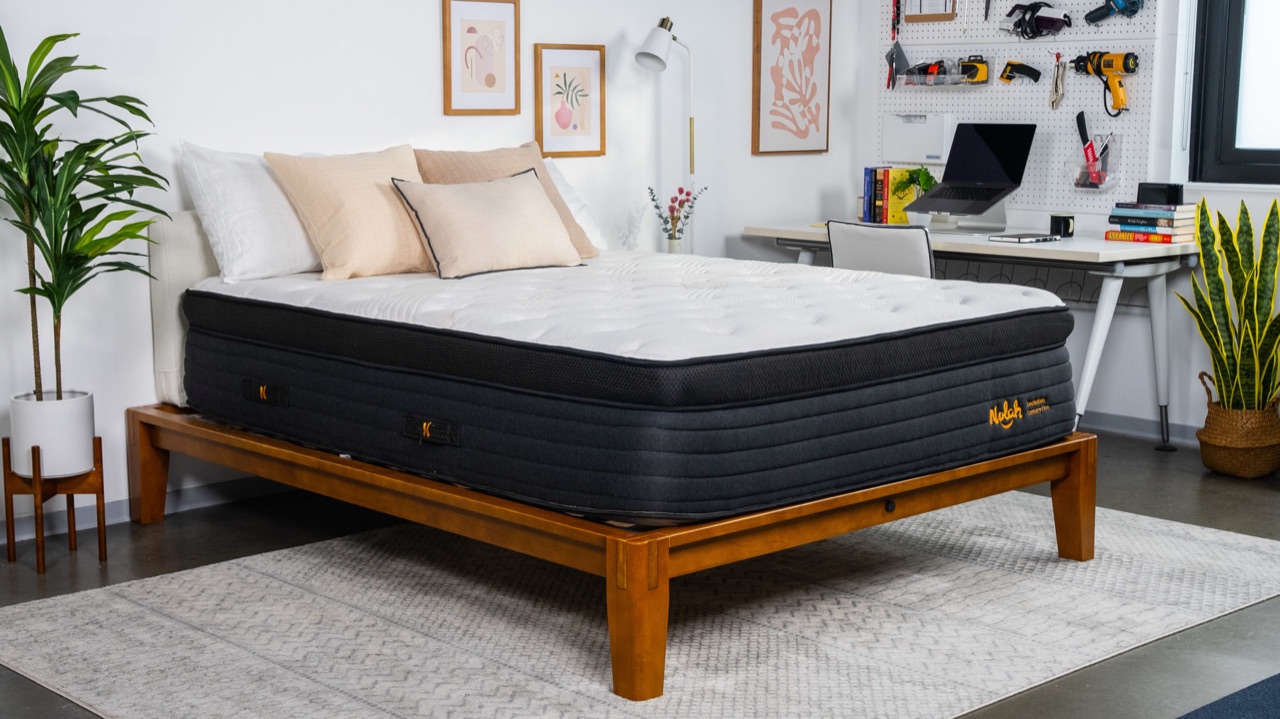
| Nolah Evolution 15 (Plush) | 4 / 10 | 14–16 ILD | 2.9 inches | 8.6 / 10 | 120 nights / Lifetime |
| Saatva Solaire | Adjustable (3–8) | Air Chamber + Latex | 2.1–3.4 inches | 8.4 / 10 | 365 nights / Lifetime |
| Tempur-Pedic LuxeAdapt (Soft) | 3.5 / 10 | TEMPUR-ES (10–12 ILD) | 3.1 inches | 7.8 / 10 | 90 nights / 10 Years |
Shopping for a soft mattress is notoriously tricky because there is a razor-thin line between pressure-relieving plushness and an unsupportive bed that sags your lumbar spine into hyperlordosis. When sleepers complain of morning lower back stiffness on a soft mattress, the issue is almost never the cushion itself; it is an inadequate transitional layer that lets the pelvis sink faster than the ribcage. When readers take our Sleep Match Quiz looking for body-contouring relief, our testing protocol focuses squarely on whether a bed can cradle bony prominences while maintaining spinal neutrality.
In our sleep lab, we test plush mattresses by measuring Indentation Load Deflection (ILD), edge deflection under concentrated weight, heat retention over six-hour thermal imaging windows, and pressure distribution at the hips and shoulders. Models like the Saatva Classic in its Plush Soft setting demonstrate how traditional innerspring support can coexist with cloud-like surface cushioning, while specialized hybrid builds like the Nolah Evolution 15 demonstrate how targeted foam cutouts relieve shoulder pressure. If you sleep with a partner who prefers sleeping on a board while you prefer a marshmallow, consider reviewing our guide to the best mattresses for couples with different firmness preferences before locking in a traditional one-piece mattress.
The Mechanics of Softness: ILD and Density Explained
A mattress does not feel soft by accident; it is a calculated mechanical response driven by the chemistry of polyurethane, memory foam, or latex. Softness is primarily governed by Indentation Load Deflection (ILD). A standard medium-firm mattress uses comfort foams rated at 20 to 28 ILD—meaning it takes 20 to 28 pounds of pressure to compress a 4-inch sample by 25 percent. True soft beds drop their comfort layers down to an ultra-compliant 10 to 14 ILD.
However, low ILD must be balanced by material density. A cheap, low-density foam (under 1.5 lbs/cu ft) with a 12 ILD rating will bottom out almost instantly under the weight of an average adult hip, sending the joint straight into the hard support coils beneath. High-performance soft mattresses rely instead on dense foams—typically 3.5 to 5.0 lbs/cu ft memory foam or graphite-infused polyfoam—that compress progressively rather than collapsing instantaneously. This progressive resistance creates that sensation of floating on a cloud while the body remains safely buoyant.
Lab Picks: The Top Soft Mattresses Evaluated
Saatva Classic (Plush Soft)
The Plush Soft version of the Saatva Classic is our benchmark for traditional innerspring beds. Registering at a 3 out of 10 on our firmness scale, its upper section features a 3-inch Euro pillow top filled with 12 ILD polyfoam quilted directly into an organic cotton cover. Beneath this plush layer sits an active pocketed coil unit (14.5-gauge steel) paired with an isolated lumbar active wire. In our sensor mat tests, lightweight side sleepers (under 130 lbs) registered zero pressure peaks at the acromion process (shoulder tip), while the lower hourglass coils prevented spinal dip.
Nolah Evolution 15 (Plush)
The Nolah Evolution 15 Plush is an exceptional match for side sleepers dealing with chronic hip bursitis or shoulder impingement. At 4 out of 10 firmness, it utilizes a 2-inch quilted ArcticTex cover followed by 2 inches of proprietary AirFoam-ICE. Unlike viscoelastic foam, this open-cell formulation does not stiffen in cold bedrooms and yields 2.9 inches of surface deflection without locking in body heat. Its 8-inch HDMax zoned coils provide stiffer resistance under the torso and lighter resistance beneath the shoulders, eliminating lateral spinal curvature.
Saatva Solaire
For sleepers who find fixed firmness too risky, the Saatva Solaire offers dual vulcanized air chambers with 50 distinct firmness increments. At settings 1 through 15, the Solaire operates at a true 3 to 3.5 firmness. What separates the Solaire from basic airbeds is its 5-layer upper comfort stack: 1 inch of natural Talalay latex (14 ILD) and a 3-inch gel memory foam Euro top cushion your pressure points long before you interact with the adjustable air chambers. It provides the plushness of a pillow top with complete control over midsection support.
Tempur-Pedic LuxeAdapt (Soft)
No discussion of soft mattresses is complete without the Tempur-Pedic LuxeAdapt Soft. Rating 3.5 out of 10 on firmness, this model features TEMPUR-ES (Extra Soft) material layered over the original TEMPUR formula. The cell structure moves slowly under heat and pressure, yielding 3.1 inches of total sinkage that wraps around the trochanter and shoulder joints. Motion transfer on this bed is near-zero (0.12 m/s² acceleration in our accelerometer drop test), making it peerless for restless partners.
Bedding and Foundation Requirements for Deep Plush Mattresses
Plush mattresses create distinct operational challenges that firmer beds do not. Most notably, high-profile soft mattresses—such as pillow-top hybrids measuring 14 to 16 inches tall—will pop standard fitted sheets off the corners during midnight movement. Before setting up your new bed, review our deep-pocket fitted sheets guide to ensure your linens feature corner pockets rated for at least 15 to 18 inches of depth.
Second, foundation rigidity is critical for soft mattresses. A soft mattress placed on an inadequate base will exaggerate lower back pain because the foundation will bend under the mattress's heavy comfort layers. Consult our breakdown of slats, platform beds, and foundations to confirm your base has slat spacing no wider than 3 inches. A sagging foundation will destroy the comfort layer and cause premature body indentations.
Maintaining Soft Mattress Integrity
Soft comfort layers fatigue faster than firm, dense transition layers. Because the upper foams are engineered with low ILDs, mechanical stress from hips and shoulders will compress those cell walls steadily over time. To ensure you do not prematurely degrade the comfort layer:
- Check the manufacturer's fine print: Understand how to read a mattress warranty regarding sagging rules. Most brand warranties only trigger if visible unweighted indentations exceed 0.75 or 1.5 inches.
- Rotate your mattress head-to-toe: Follow our mattress rotation schedule every 90 days to distribute body impressions evenly across the sleeping surface.
- Respect the break-in phase: New plush foams can feel surprisingly firm out of the box until heat and mechanical movement soften the crosslinked polymers. Read our guide on understanding sleep trials and return windows before assuming your new bed is defective during the first three weeks.
If you are timing your purchase to maximize value, track holiday discounting through our mattress deals and coupon hub.
Frequently Asked Questions
Will a soft mattress cause lower back pain?
A soft mattress will only cause lower back pain if it lacks a supportive transition layer or zoned core. When a mattress is too soft throughout its entire core, the pelvis sinks deeper than the shoulders and legs, throwing the lumbar spine out of alignment. If you sleep primarily on your side and weigh under 230 pounds, a soft mattress with adequate deep-layer support typically alleviates back pain by reducing spinal pressure.
What type of sleeper is a soft mattress best for?
Soft mattresses (3 to 4.5 out of 10 on the firmness scale) are ideal for strict side sleepers, petite individuals weighing under 130 pounds, and people with joint pain, bursitis, or fibromyalgia. Stomach sleepers should avoid soft mattresses entirely, as the lack of abdominal support causes excessive hyperextension in the lumbar spine.
How do I know if my mattress is too soft?
Signs that your mattress is excessively soft include waking up with a dull ache in your lower back, struggling to roll over or change positions in bed, feeling like you are trapped in a ditch, and experiencing numbness or tingling in your arms from sinking too far beneath the pillow plane.
Final Verdict
If you want the plush feel of an authentic hotel pillow top without giving up spine alignment, the Saatva Classic in Plush Soft remains our top recommendation for traditional hybrid fans. For dedicated side sleepers battling hip and shoulder pain, the Nolah Evolution 15 Plush provides deeper pressure dissipation through zoned airfoam. Choose your plush bed based on your sleeping position and body weight, pair it with a rigid foundation, and allow at least 30 nights for those plush comfort layers to break in.

Jessica Moore, Certified Sleep Science Coach
Jessica has spent 8+ years analyzing biomechanics, pressure relief mapping, and mattress ergonomics. She leads our independent sleep lab in Austin, TX, overseeing thermal, motion, and durability testing.