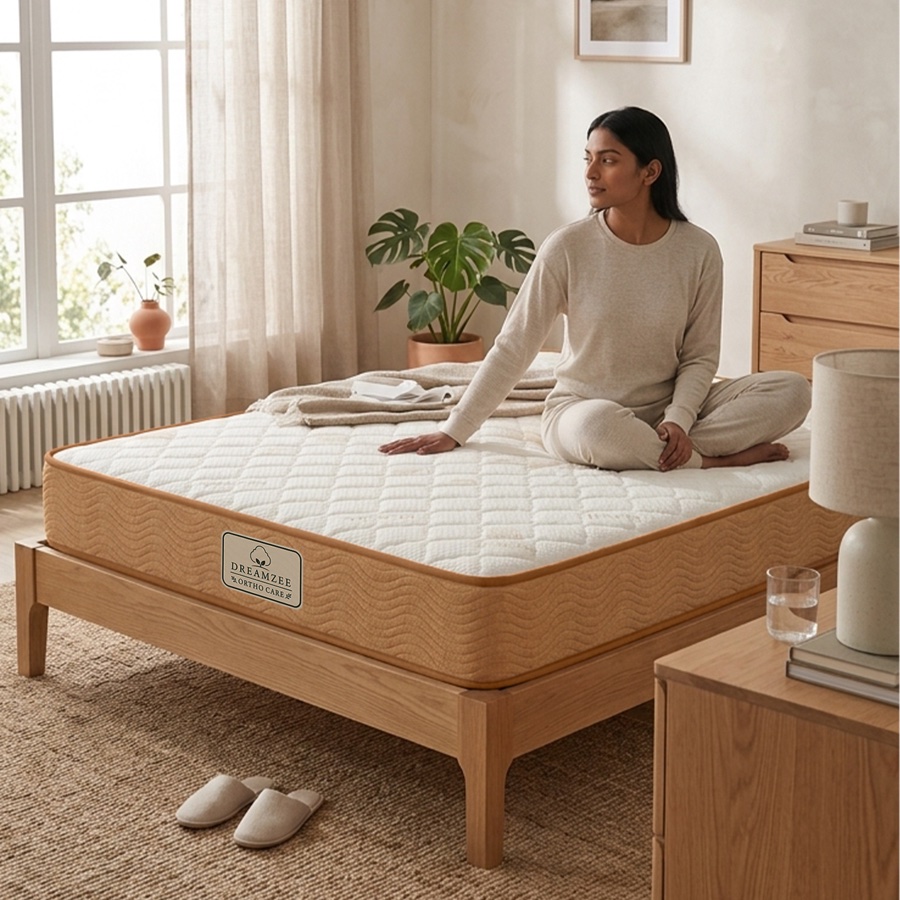
Brooklyn Bedding Plank Mattress Review (2026)

Jessica has spent 8+ years analyzing biomechanics, pressure relief mapping, and mattress ergonomics. She leads our independent sleep lab in Austin, TX, overseeing thermal, motion, and durability testing.
We independently purchase every mattress and evaluate it inside our Austin sleep lab across 4 key benchmarks: sensor pressure relief, thermal cooling, motion transfer, and long-term durability.
Most mattress manufacturers throw the word “firm” around loosely, delivering what actually amounts to a forgiving medium-firm bed that caves beneath moderate weight. The Brooklyn Bedding Plank does not play that game. Built inside Brooklyn Bedding’s own foundry in Arizona, this dual-sided slab is engineered for sleepers who want an unyielding, board-flat sleep surface. If you are struggling with lower back tightness, pairing the right foundation with why stomach sleepers need firmer support is crucial, and the Plank takes that philosophy to its absolute mechanical limit.
While shoppers hunting for plush beds often gravitate toward designs like the Brooklyn Signature vs Ghostbed matchup or traditional models on our best soft mattress ranking, the Plank serves a distinct demographic. It is built for stomach sleepers, heavy back sleepers, and orthopedic purists who demand flat lumbar planes. In our testing lab, we pushed both sides through our digital sensor pads, thermal cameras, and perimeter deflection rigs to see whether this flippable mattress delivers long-term spinal support or simply feels like sleeping on floorboards.
✓ What We Liked
- • Genuine, uncompromising ultra-firm feel on the flat side
- • Zero lumbar dipping for strict stomach sleepers
- • Dual-sided flippability doubles mattress wear longevity
- • Outstanding motion dampening through high-density polyfoam layers
- • Optional GlacioTex cover neutralizes high-density foam surface heat
✕ What Could Be Better
- • Severe pressure concentration for strict side sleepers under 180 lbs
- • Minimal contouring can feel jarring for traditional memory foam fans
- • Requires two people to flip safely despite a compact 10-inch profile
Construction and Layer Breakdown
The Plank measures exactly 10 inches tall and is constructed as a flippable, mirror-concept all-foam mattress. Because it houses two usable surfaces, every layer works double-duty as either comfort padding or foundational stability depending on which orientation you choose.
- The Ultra-Firm Side Cover: A 0.75-inch quilted top fabric using a tight, continuous stitch pattern. This stitching eliminates loft and creates zero surface slack, pinning you right against the dense interior layers.
- The Firm Side Comfort Layer: When rotated to the “gentler” side, you get a 2-inch layer of Supreme Response Comfort Foam (a high-density TitanFlex transition polyfoam). It provides minimal compression to smooth out hard bony ridges without letting the hips drop.
- The Firm Side Cover: A 0.75-inch quilted cover finished with a tack-and-jump stitch design. It provides a touch more plushness than the ultra-firm surface, though it remains distinctly taut.
- The Core Support Engine: Sandwiched directly in the middle is a 6-inch high-density base support foam core. This dense mass forms the unshakeable foundation for both sleep surfaces and prevents the mattress from bowing under heavier loads.
- Optional GlacioTex™ Upgrade: Hot sleepers can add a phase-change cooling cover that zips over the mattress, pulling heat off the surface upon skin contact.
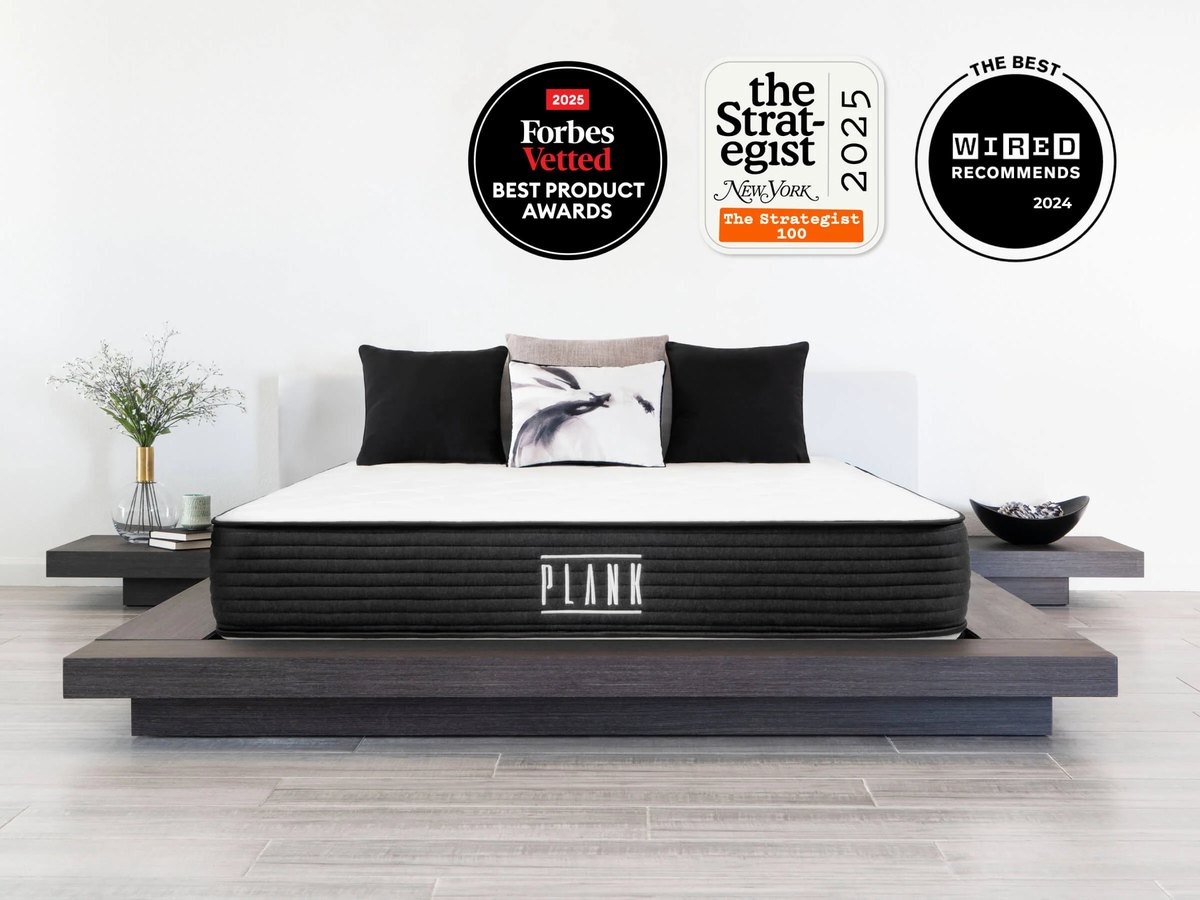
Brooklyn Bedding Plank Specifications & Details
Firmness and Real Feel
We rate mattress firmness on an objective 1 to 10 scale where 10 is an oak floor. The “Firm” side of the Plank registers at an 8/10. You get approximately one inch of initial cushion from the quilted cover and TitanFlex foam before your body meets the core slab. It holds your pelvis strictly level, offering just enough flex to prevent direct bruising on the hips.
The “Extra-Firm” (Ultra-Firm) side registers at a bone-dry 9.5/10. It features no intermediate transition foam at all. You are lying directly against three-quarters of an inch of flat quilting backed immediately by 6 inches of high-density base foam. Sinking into the bed does not happen; you rest 100% on top of the surface plane.
Lab Pressure Sensor Results
Our calibrated sensor mapping revealed dramatic contrasts across body postures on the Plank. When our testers evaluated the bed for back sleeping, the mattress performed exceptionally well. The spine maintained clean alignment without sagging at the sacrum. For back sleepers coping with lumbar fatigue, the Plank stands alongside the firmest options on our best mattress for back pain list by maintaining spinal posture.
Pressure Relief Mapping
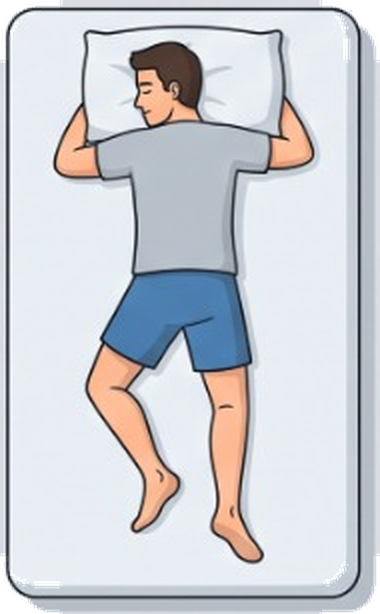
The Plank holds the pelvis on a totally horizontal plane, completely eliminating hyperextension of the lower spine. Both our 175-lb and 240-lb testers recorded exceptional alignment with zero belly sink.
For stomach sleeping, the Plank is phenomenal. The biggest hazard for prone sleepers is pelvic dip, which forces the lumbar vertebrae into hyperextension. On the Plank’s 9.5/10 side, our pelvic displacement gauge measured less than 0.4 inches of sinkage under our 215-pound tester. It is easily one of the premier performers on our best firm mattress roundup for this posture.
Side sleeping, however, is where the Plank hits a structural wall. In our lateral trials, our testers recorded sharp pressure peaks at both the shoulder and hip joints. If you are prone to arm tingles, our guide to side sleepers and shoulder numbness explains why inadequate comfort depth constricts circulation. Similarly, resting on these dense foams can trigger lateral trochanteric bursitis; our breakdown on hip pain from your mattress underscores why dedicated side sleepers require deeper sinkage than the Plank provides.
Cooling, Motion Transfer, and Edge Support
Because the Plank is a dense, all-foam bed, traditional airflow through the core is naturally lower than what you see on hybrids like the Brooklyn Bedding Titan vs Big Fig matchup. However, the Plank compensates by keeping you on top of the mattress rather than wrapping you in heat-trapping foam. In our thermal retention tests, surface heat dissipated within 3.5 minutes. If you run hot, we strongly suggest selecting the GlacioTex cover upgrade to accelerate conductive cooling.
Motion isolation is a major strength. High-density base foams absorb kinetic shock instantly. During our 12-pound bowling ball drop tests, vibration traveled less than 8 inches from the impact zone. If your partner tosses and turns, you will barely notice it.
Edge support on the Plank also scored high marks. While foam beds frequently collapse along the perimeter, the sheer density of the Plank’s 6-inch support core resisted sinkage. When sitting on the edge to tie our shoes, the perimeter compressed just 1.75 inches—stellar for an all-foam bed-in-a-box.
Head-to-Head Comparisons
To see how the Plank compares across the broader industry, we lined it up against three other beds known for strong support:
| Mattress | Mattress Type | Firmness (1-10) | Profile | Trial / Warranty | Starting MSRP |
|---|---|---|---|---|---|
| Brooklyn Bedding Plank | Flippable All-Foam | 8.0 & 9.5 / 10 | 10" | 365 Nights / Lifetime | $749 |
| Saatva Classic | Innerspring Hybrid | 4.0, 6.5, or 8.0 / 10 | 11.5" or 14.5" | 365 Nights / Lifetime | $1,095 |
| WinkBeds | Euro-Top Hybrid | 4.5, 6.5, 7.5, or 8.5 / 10 | 13.5" | 120 Nights / Lifetime | $999 |
| Casper Original | All-Foam Zoned | 6.0 / 10 | 11" | 100 Nights / 10 Years | $599 |
Shoppers wanting firm coil resilience often review the Saatva Classic, which offers a traditional dual-coil bounce and plush Euro-top cushioning. For dedicated stomach and heavy back sleepers, the Plank provides a flatter, less springy surface. Those needing heavy-duty hybrid lift might consider the WinkBeds Plus model, while standard sleepers wanting medium foam contouring lean toward the Casper. But neither reaches the uncompromising, board-like rigidity of the Plank's extra-firm face.
If you prefer high-end contouring with coil breathability, explore models like the Helix Midnight Luxe or the Bear Elite Hybrid. But if your goal is zero pelvic sink, the Plank stands in a class of its own.
Who Is This Mattress Best For?
✓ Highly Recommended For:
- • Stomach sleepers who suffer from lower spine hyperextension on typical beds
- • Back sleepers with chronic lumbar fatigue wanting an orthopedic-flat plane
- • Heavier sleepers (over 230 lbs) seeking dense all-foam support that will not bottom out
- • Shoppers looking for a dual-sided flippable mattress with lifetime warranty protection
✕ Consider Skipping If:
- • Dedicated side sleepers prone to shoulder impingement or hip soreness
- • Lightweight sleepers under 130 lbs who will barely compress the top stitch layer
- • Sleeper profiles that require deep, plush memory foam hugging
Brooklyn Bedding Plank
Back and stomach sleepers needing flat, sag-free spinal support
Frequently Asked Questions
Does the Brooklyn Bedding Plank really feel like sleeping on a board?
The Ultra-Firm side (9.5/10) comes remarkably close. It provides just 0.75 inches of quilted stitch fabric over a rigid 6-inch high-density base core. Sinking is virtually undetectable. The Firm side (8/10) adds 2 inches of TitanFlex foam, softening the surface slightly while remaining notably firmer than standard retail beds.
Can side sleepers break in the Plank over time?
No. Even after our standard 30-day conditioning cycle, the dense polyfoam core does not yield enough cushion depth to protect shoulder joints or hips. Side sleepers should steer toward contouring models like the Nectar Memory Foam to prevent chronic joint pain.
What trial period and warranty come with the Plank?
Brooklyn Bedding backs the Plank with an industry-leading 365-night sleep trial (with a required 30-night break-in period before returns) and an upgraded Limited Lifetime Warranty for long-term peace of mind.
Jessica Moore, Certified Sleep Science Coach
Jessica has spent 8+ years analyzing biomechanics, pressure relief mapping, and mattress ergonomics. She leads our independent sleep lab in Austin, TX, overseeing thermal, motion, and durability testing.