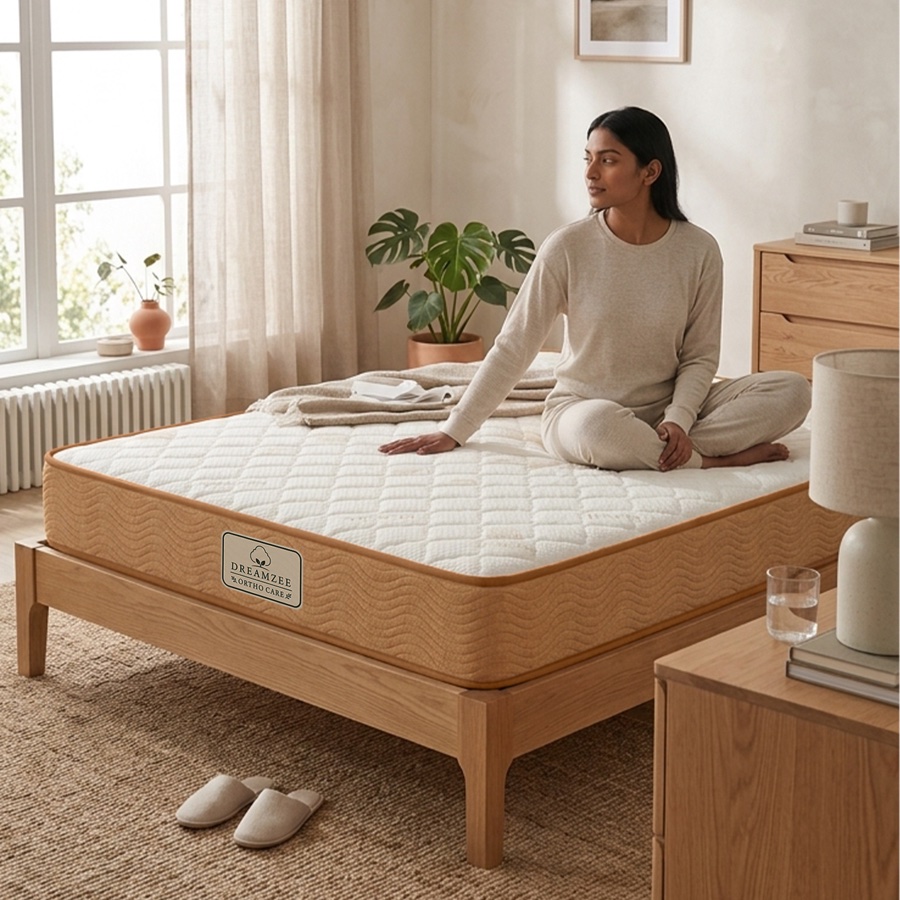
Nectar wins on overall value and pressure contouring, while Purple takes the crown for hot sleepers and dynamic repositioning.
Nectar Memory Foam
12-Inch Gel Foam Mattress, Starting at $349
- Near-perfect motion isolation (9.9/10) for uninterrupted sleep
- Deeper pressure relief (9.8/10) under hips and shoulders
- Industry-leading 365-night trial and Forever Warranty
Purple Mattress
9.25-Inch GelFlex Grid Mattress, Starting at $799
- Unmatched airflow and cooling performance (9.5/10)
- Instant elastic rebound that prevents feeling 'stuck'
- Buckling-column tech supports proper spinal alignment
Key Takeaways
- Nectar Memory Foam isolates motion significantly better (9.9/10 vs 9.2/10), making it superior for restless couples.
- The original Purple dominates thermal regulation with an open-column GelFlex Grid (Cooling: 9.5/10 vs Nectar's 8.9/10).
- Nectar offers substantially longer protection: a 365-night trial and Forever warranty against Purple's 100-night trial and 10-year warranty.
- Side sleepers seeking classic contouring favor Nectar, while combo sleepers needing instant responsiveness prefer Purple.
| Metric / Feature | Nectar Memory Foam | The Purple Mattress |
|---|---|---|
| Overall Lab Score | 9.7 / 10 | 9.3 / 10 |
| Starting Price | $349 | $799 |
| Firmness Rating | Medium-Firm (6 / 10) | Medium-Firm (6.5 / 10) |
| Mattress Height | 12 inches | 9.25 inches |
| Cooling & Thermal Dissipation | 8.9 / 10 | 9.5 / 10 |
| Motion Isolation | 9.9 / 10 | 9.2 / 10 |
| Edge Support | 8.8 / 10 | 8.5 / 10 |
| Trial & Warranty | 365 Nights / Forever | 100 Nights / 10 Years |
Choosing between the flagship Nectar Memory Foam and the original Purple comes down to a fundamental structural divide: slow-responding visco-elastic foam versus a buckling hyper-elastic polymer grid. Both models sit comfortably on our best mattress in a box shortlist, yet they produce entirely divergent sensations the moment you lie down.
While the market is flooded with options—from coil hybrids like the Nectar Classic Hybrid and Purple Hybrid to high-end luxury builds like the Nectar Luxe Hybrid—these two flagship all-foam/polymer builds remain industry benchmarks. In this editorial breakdown, we look at the raw physical data collected inside our testing lab to determine which mattress fits your body mechanics, sleeping temperature, and budget.
Construction and Feel Differences
The construction of these beds represents two distinct schools of sleep engineering. The Nectar Memory Foam stands 12 inches tall, utilizing a breathable cooling cover woven with heat-dissipating fibers, followed by 3 inches of therapeutic gel-infused memory foam, a dynamic response transition layer, and a dense polyfoam support core. The sensory experience is classic, plush memory foam. You sink in slowly, the material molds to every contour, and body weight distributes broadly over several seconds. It provides that traditional "in the mattress" embrace without feeling like quicksand.
By contrast, the original Purple mattress stands 9.25 inches tall and features 2 inches of proprietary hyper-elastic polymer molded into a geometric grid (the GelFlex Grid), supported by two dual-layer polyfoam base cores totaling 7.25 inches. The feel is unique: it is cool to the touch, rubbery, and remarkably dynamic. Rather than slowly contouring, the grid walls flex directly under high-pressure points—like the lateral pelvis and shoulder blades—while remaining stiff under broader surface areas like the lumbar spine. It gives you an "on top of the mattress" sensation with instant bounce.
Pressure Relief and Spinal Alignment
To measure pressure mitigation, we set up sensor mats across light (under 130 lbs), average (130–230 lbs), and heavyweight (over 230 lbs) testers across all sleeping positions.
Nectar excelled during side-sleeping evaluations, registering a pressure relief score of 9.8/10. The 3-inch gel memory foam top slab allows the acromion process (shoulder joint) and greater trochanter (hip bone) to sink deeply enough to keep the cervical and thoracic spine in a neutral line. This explains why side sleepers frequently cross-shop it against beds featured in our Nectar vs Casper and Nectar vs Puffy comparisons.
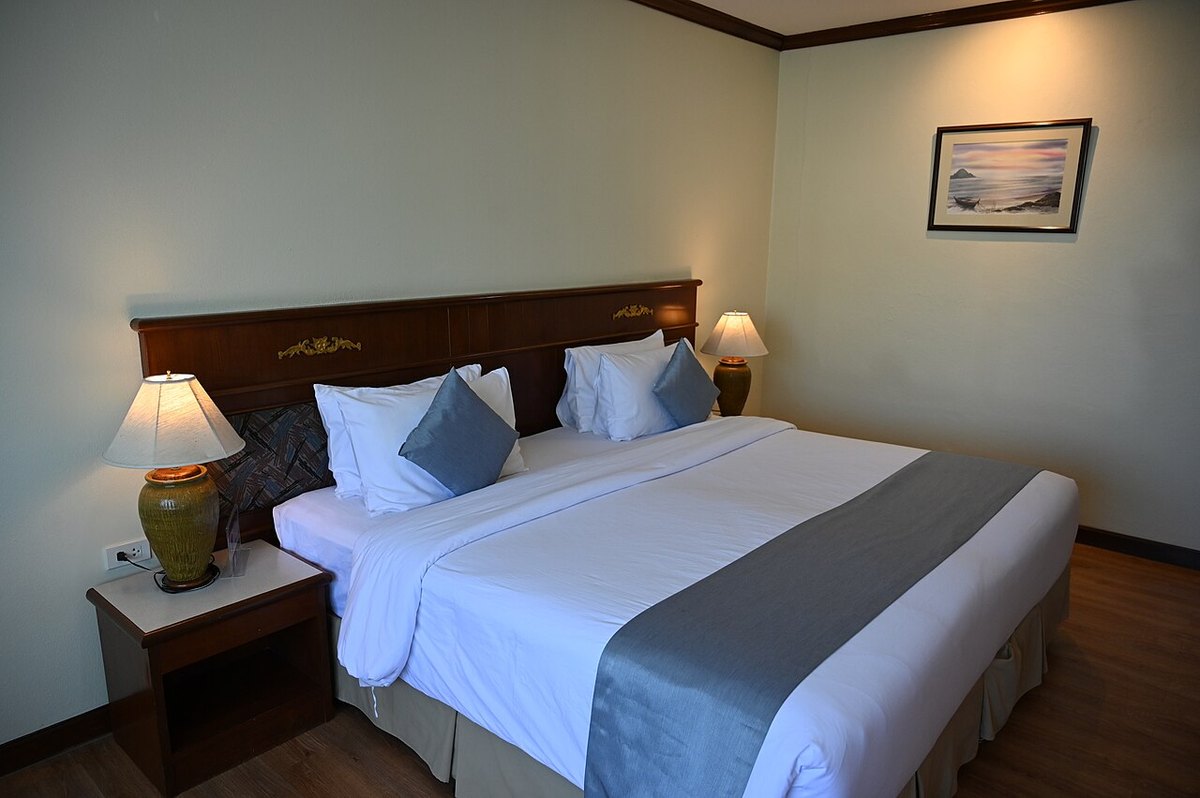
Purple registered a strong 9.3/10 for pressure relief. For back sleepers and combo sleepers under 200 pounds, Purple’s grid buckle mechanism works brilliantly. When testing spinal curvature, lumbar support remained flat and engaged. However, our heavy side-sleeping testers (over 230 lbs) found that the 2-inch grid bottomed out against the firm underlying foam layers, causing localized pressure spikes at the hip joint. If you have a larger frame and want Purple's grid technology, you are generally better served looking at pocketed coil designs, such as the Purple Hybrid, or checking our recommendations in the best mattress for heavy people guide.
Motion Transfer and Couples Testing
For sleep partners, motion isolation can make or break night-to-night sleep continuity. We tested both mattresses using accelerometers placed 12 inches away from a 15-pound kettlebell dropped from a standard height of 24 inches, followed by real-world rolling and exit tests.
Nectar is a standout performer here, earning a near-flawless 9.9/10 motion isolation score. The dense visco-elastic foam deadens kinetic energy almost instantly; our seismic sensors registered practically flat lines outside a 6-inch radius. If your partner tosses, turns, or gets up frequently, Nectar easily outperforms bouncy options, ranking high on our curated best mattress for couples list.
Purple achieved a respectable 9.2/10. The polymer grid isolates movement well vertically because the columns buckle independently. However, the elastic snap of the polymer walls and the firmer base foams do allow a fraction more vibration to ripple horizontally across the bed than Nectar's dead-stop memory foam. While it dampens disturbance better than a traditional innerspring, light sleepers with restless partners will notice the difference.
Temperature Regulation and Cooling
Thermal performance is where Purple secures a decisive victory. Using FLIR thermal imaging cameras, we measured surface heat dissipation over a 60-minute duration after an adult subject exited the bed.
Purple scored an exceptional 9.5/10 in cooling. Because the GelFlex Grid consists of open square columns, 80% of its volume is ambient air. Body heat does not get trapped; it immediately vents downward and out through the grid walls. It sleeps cooler than almost every competing all-foam mattress on the market, a trait we also observed when running our Purple vs Layla and Purple vs Puffy lab tests.
Nectar scored an 8.9/10. While the gel infusions and breathable cover prevent the extreme heat retention common to first-generation foams, it remains an insulating block of visco-elastic material. It does not actively sleep hot, but if you wake up sweating on a regular basis, Purple's raw passive airflow is clearly superior.
Edge Support and Ease of Movement
Edge support is essential if you sit on the perimeter to lace shoes or maximize surface area in a Queen size. Neither all-foam build performs like a steel-reinforced perimeter mattress such as the Saatva Classic, but there are functional differences:
- Nectar Edge Support (8.8/10): The 12-inch profile and 7 inches of dense base foam provide surprisingly steady compression resistance along the perimeter. Sitting on the edge compresses the foam roughly 3.4 inches, offering reassuring stability.
- Purple Edge Support (8.5/10): Purple lines its outer border with dense polyurethane foam rails to support the gel grid. While this keeps you from sliding off while sleeping, sitting right on the edge produces noticeable give (compressing roughly 3.8 inches) due to the shorter 9.25-inch total height.
When it comes to ease of movement, Purple wins easily. The GelFlex Grid snaps back instantaneously, requiring zero effort to change sleep positions. Nectar has a minor delayed-recovery lag, which back sleepers who switch to their stomach might feel as subtle resistance.
Value, Trial, and Warranty
On balance sheets, Nectar dominates. Starting at just $349 ($659 for a Queen), it includes an industry-topping 365-night sleep trial and a Forever Warranty. Purple starts at $799 ($1,499 for a Queen) and includes a standard 100-night trial backed by a 10-year warranty. Before committing, we strongly suggest reading our guide on how to read a mattress warranty to understand indentation tolerances and foundation requirements.
Final Verdict: Which Should You Buy?
Buy the Nectar Memory Foam if:
- You want deep, pressure-melting contouring that cradles your hips and shoulders.
- You share the bed with a restless partner and demand maximum motion deadening.
- You want maximum value, backed by a full 1-year home trial and lifetime warranty protection.
Buy the Purple if:
- You are an exceptionally hot sleeper who needs constant passive airflow.
- You are a combination sleeper who prefers bouncing on top of the bed over sinking in.
- You suffer from mid-back stiffness and need instantaneous buckling-column support to stabilize spinal posture.
Frequently Asked Questions
How do break-in periods compare between Nectar and Purple?
Nectar requires roughly 3 to 4 weeks for the cell structure of the visco-elastic foam to soften to its true 6/10 firmness. Purple's GelFlex grid feels identical on Night 1 as it does on Night 90, though your muscles may need two weeks to adjust to the buckling feel. Read our breakdown on understanding mattress sleep trials for tips on navigating break-in periods.
Can I use regular sheets on both mattresses?
Yes, though Purple performs best with stretchy jersey or bamboo sheets that expand with the grid. Standard non-stretch sheets can create a "drum-tight" effect that prevents the GelFlex grid from collapsing under pressure points. For detailed pocket guidelines, consult our deep-pocket fitted sheets guide.
Do either of these mattresses require flipping?
No. Both beds are strictly single-sided designs with top comfort slabs and bottom foundational layers. Flipping either will void your warranty and result in sleeping directly on hard base foam. To keep wear patterns even, follow our brand-by-brand maintenance schedule and rotate them 180 degrees every 6 months.
Jessica Moore, Certified Sleep Science Coach
Jessica has spent 8+ years analyzing biomechanics, pressure relief mapping, and mattress ergonomics. She leads our independent sleep lab in Austin, TX, overseeing thermal, motion, and durability testing.