
Key Takeaways
- Sharp localized ache over the outer hip bone usually signals a mattress that is too firm (high peak PSI pressure).
- Deep groin stiffness or low-back + hip pull usually signals a mattress that is too soft (pelvic hammock tilt).
- Check the surface with a broomstick across the hip zone: any dip deeper than 0.75–1 inch breaks alignment.
- Adding a plush topper fixes a too-firm bed; only replacement or firmer zoning fixes a sagging soft bed.
Morning hip soreness is one of the most misdiagnosed sleep complaints we hear from readers. When your outer hip feels bruised at sunrise, your first instinct is almost always the same: my mattress must be too hard—I need a plush memory foam topper immediately.
Yet nearly half the time inside our Austin sleep lab, throwing a soft topper onto a hip-pain problem makes symptoms noticeably worse within ten days. Why? Because both an overly rigid mattress and a collapsed, overly soft mattress trigger hip pain—just through completely opposite mechanical failures.
Use these clear physical clues and two 60-second home tests to tell for sure which problem is sitting under your fitted sheet before spending a dollar.
Symptom Profile #1: Your Mattress Is Too Firm
When a mattress lacks upper comfort yield, bony prominences take high localized compression all night without sinking far enough to distribute load.
- Sharp, Tender Pain Right Over the Greater Trochanter: Press two fingers against the bony side knob of your upper thighbone. If that exact spot feels bruised or inflamed first thing in the morning—especially on whichever side you slept on—excess contact PSI pressure is the culprit.
- Restless Toss-and-Turn Cycles: Every 45 to 60 minutes, restricted skin circulation forces you to flip from hip to hip just to stop burning numbness.
- Visible Gap Under Your Waist: Lie on your side and notice whether your ribcage and waist hover above the fabric while your hip bone and shoulder bear all the weight.
How lab testing mirrors this: On firm 7.0+ models with thin comfort padding like the Nectar Classic Hybrid, pressure sensors spike rapidly above 30 mmHg over the outer pelvis for average-weight side sleepers.
Symptom Profile #2: Your Mattress Is Too Soft (or Sagging)
When comfort foam is too plush or a worn support core fatigues, the heaviest slice of your body—your hips and pelvis—sinks lower than both your upper torso and your knees.
- Deep, Stiff Ache Inside the Hip Flexors, Groin, or SI Joint: Instead of surface tenderness on the outer bone, you feel tight pulling deep around the hip joint, glutes, and lower back simultaneously.
- Feels Cozy at Bedtime, Hurts by Dawn: Plush foam tricks your brain during the first twenty minutes while your muscles are warm, then lets pelvic alignment collapse hour by hour until 5 a.m.
- Morning Pain Vanishes Fast Once Moving: Once you stand upright and restore neutral pelvic alignment for twenty minutes, the stiffness fades away.
Sleep Lab Note from Jessica Moore: Watch out for the "sunk-in topper trap." Adding a 3-inch soft gel topper onto an already sagging mattress simply contours straight down into the existing body valley—pushing your hips even further out of square.
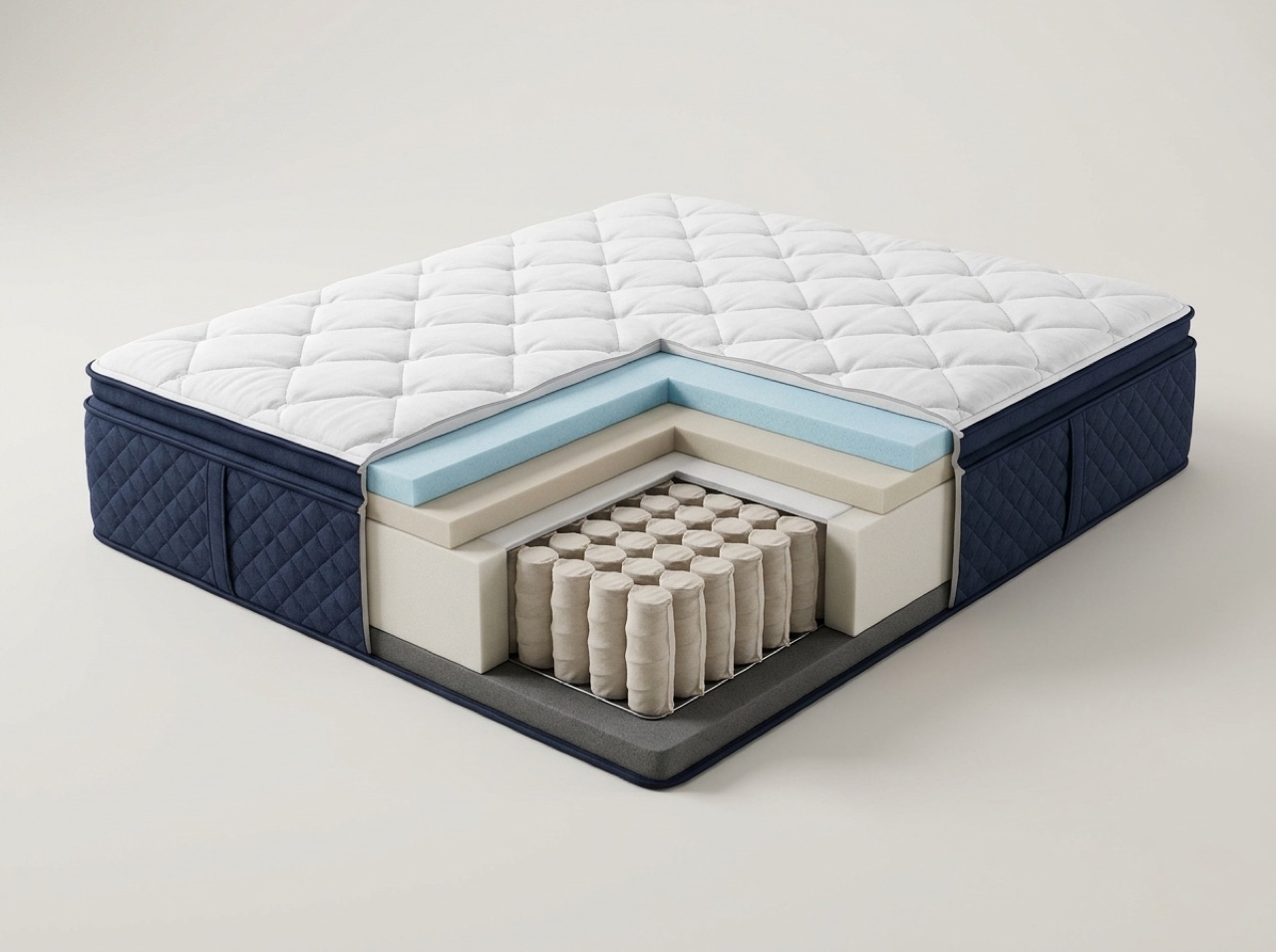
Too Soft vs. Too Firm: Quick Diagnostic Comparison
| Diagnostic Clue | Mattress Is Too Firm | Mattress Is Too Soft / Sagging |
|---|---|---|
| Exact Pain Location | Sharp, bruised feeling on outer hip bone | Deep stiffness in hip crease, glute, and lower back |
| Surface Waist Check | Clear hollow gap under your waist on your side | Waist sinks deeper than knees and ribcage |
| Bed Surface Age | Often brand-new or under 3 years old | Frequently 6+ years old or uneven body dip |
| Flipping Position Helps? | Switching sides briefly relieves burning ache | Every position still feels crooked by 4 a.m. |
| Right Fix | 2"–3" plush latex/AirFoam topper or softer zoned hybrid | Replace fatigued support core (topper will NOT fix it) |
Two 60-Second Lab Checks You Can Run at Home Today
Check 1: The Broomstick Sag Test
Strip all blankets and fitted sheets off your mattress. Lay a straight wooden broom handle or metal yardstick widthwise across the center hip zone. Peek underneath at eye level:
- 0 to 0.4 inches gap: Support core is still healthy and flat. If your hips ache on a flat bed, it is probably too firm for your weight.
- 0.75 inches or deeper: Foam or coils have lost structural pushback. Warranty thresholds typically require 0.75" to 1.5" of visible sag, and no pad on top will restore alignment.
Check 2: The Palm Waist-Gap Check
Lie on your side in your normal sleeping pose for three minutes and reach your free hand beneath your waist:
- Hand slides easily with empty air: Bed is too firm to let your hip and shoulder tuck in cleanly.
- Hand wedges tightly while hips feel lower than your ribs: Bed is too soft under your midsection.
What to Buy If You Need a Replacement
To keep hips both cushioned and aligned, skip cheap single-density sponges and look for zoned hybrids calibrated around 5.5 to 6.5 / 10:
- Best Side-Sleeper Hip Relief: Helix Midnight Luxe (9.9/10 pressure relief, zoned center coils hold hips up while the quilted top eases outer-hip pressure).
- Best Deep Cushion + Cooling: Nolah Evolution 15 (9.8/10 pressure relief, temperature-neutral AirFoam™ HD absorbs sharp hip pressure without heat trap).
- Best Value All-Foam Option (Under 210 lbs): Nectar Memory Foam (9.8/10 pressure relief, 365-night home trial).
- Best Firmer Euro-Top for Heavier Sleepers: DreamCloud Premier or Saatva Classic.
Compare how your weight shifts perceived firmness in our Mattress Firmness Guide, take our 60-second Sleep Match Quiz, or check active discounts on Mattress Deals & Coupons.

Jessica Moore, Certified Sleep Science Coach
Jessica has spent 8+ years analyzing biomechanics, pressure relief mapping, and mattress ergonomics. She leads our independent sleep lab in Austin, TX, overseeing thermal, motion, and durability testing.



