Key Takeaways
- Gel swirls and infusions offer brief initial coolness but reach thermal equilibrium with your body heat in 15 to 25 minutes.
- Copper and graphite provide marginal conductive gains, yet their microscopic concentrations in polyurethane foam yield negligible real-world cooling.
- Phase-Change Materials (PCMs) actively regulate surface microclimates by absorbing latent heat, but require breathable airflow below to regenerate.
- Open-cell hybrid construction with dedicated pocket coils remains the primary driver of sustained, whole-night temperature neutrality.
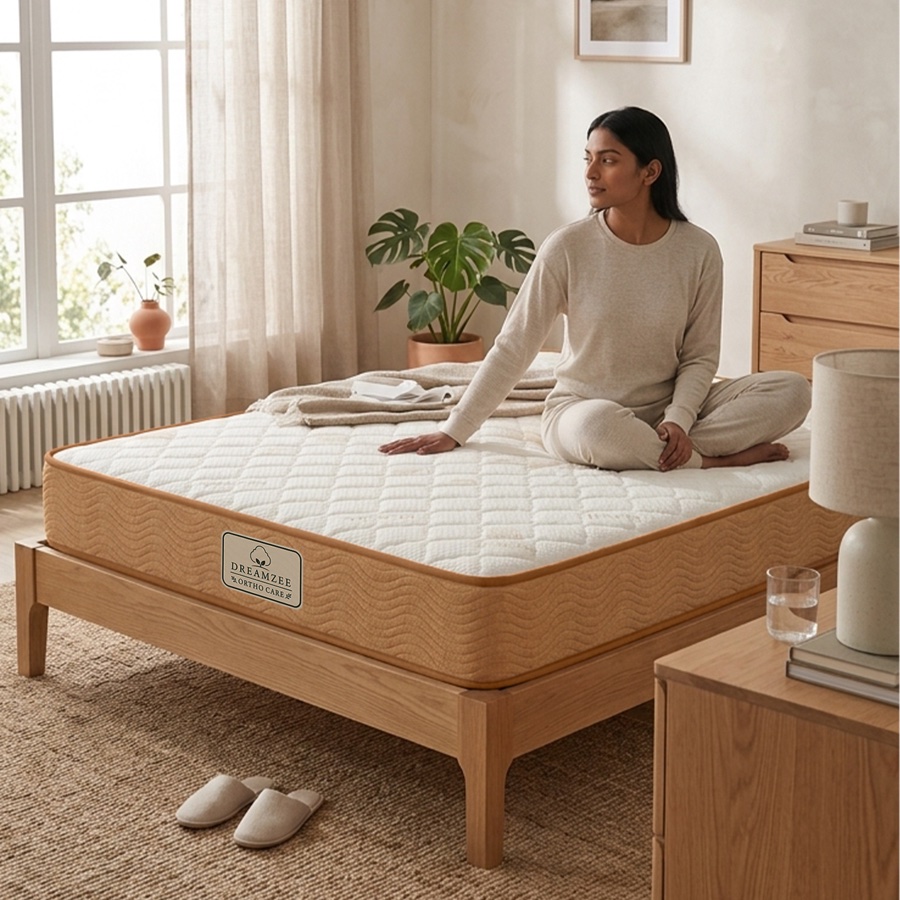
Every mattress showroom visit begins with the same seductive sensation: you rest your palm on an icy quilt, marvel at the cool-to-the-touch fabric, and assume you have discovered the antidote to waking up drenched in sweat. As testing engineers evaluating dozens of models for our Best Cooling Mattress lab guides, we see this marketing sleight-of-hand constantly. Initial surface chill rarely translates into continuous thermoregulation after forty-five minutes under a duvet.
When we evaluate contenders like the high-scoring Bear Elite Hybrid or popular entry-level beds like the Nectar Memory Foam, our primary goal is separating transient surface gimmicks from genuine thermodynamic performance. For sleepers scanning the Best Mattress 2026 rankings to fix broken sleep, understanding the physical mechanisms behind heat dissipation is the only way to avoid wasting thousands of dollars on ineffective foam.
The Thermodynamic Problem: Heat Retention vs. Dissipation
Your body functions as an organic heat engine, steadily expelling 60 to 100 watts of thermal energy while you sleep. To initiate deep non-REM rest, your core body temperature must drop by roughly 1 to 2 degrees Fahrenheit. Traditional petroleum-based viscoelastic memory foam, made famous by classic Tempur-Pedic models, is an exceptional thermal insulator. The tightly packed cellular structure that allows memory foam to conform around your hips and shoulders simultaneously traps radiant body heat directly beneath your torso.
Once trapped, that heat reflects back into your subcutaneous tissues. This microclimate heating triggers vasodilation, elevated heart rate, and micro-arousals that pull you out of restorative delta-wave sleep. To combat this physical trap, mattress engineers implement three primary technologies: thermal conduction via metallic infusions (copper/graphite), conductive buffering via thermal mass (gel), and latent heat storage via chemical phase transitions (PCM). Let us examine how each holds up under an infrared lens.
Gel Infusions: The Thermal Mass That Saturates Early
Gel-infused memory foam was the mattress industry's first major attempt to resolve foam's heat retention. Manufacturers inject liquid polymer beads or swirl silicone-based gels directly into the polyurethane slurry during manufacturing. The concept leans on liquid gel's relatively higher specific heat capacity compared to standard polyurethane foam.
In our temperature-controlled chamber (maintained at a strict 70°F and 45% relative humidity), gel does feel perceptibly cooler for the first 10 minutes. It acts as a temporary heat sink, drawing energy away from your skin faster than bare polyurethane.
However, a thermal heat sink without an active exhaust system has a strict ceiling. Once the gel beads absorb enough energy to match your body temperature (typically between 91°F and 94°F at the skin interface), heat absorption completely stops. Under continuous contact, standard gel memory foam reaches thermal equilibrium within 18 to 24 minutes. After this point, the foam beneath holds the accumulated warmth, preventing natural dissipation.
Copper and Graphite: Conductive Physics in Microscopic Doses
Copper and graphite infusions are frequently marketed for both thermal conductivity and antimicrobial benefits. Thermodynamically, copper boasts a thermal conductivity of roughly 400 W/m·K, while pure graphite can exceed 1,000 W/m·K. Polyurethane foam, by contrast, sits around a sluggish 0.03 W/m·K.
On paper, blending hyper-conductive elements into an insulator should bridge thermal pathways outward, channeling body heat to the periphery of the mattress. Yet lab dissections reveal a stark reality: these infusions represent less than 2% to 5% of the total foam matrix volume. Dispersed copper flakes do not form an uninterrupted conductive superhighway; they are isolated islands suspended in a vast sea of insulating polyurethane.
While copper-treated beds like the Helix Midnight Luxe or the high-density foam stacks in the Nolah Evolution 15 achieve excellent pressure relief, our FLIR infrared cameras consistently prove that metallic additives alone lower sustained surface temperatures by less than 0.8°F over a 60-minute duration. They are structurally beneficial for foam durability, but modest players in thermal relief.
Phase-Change Materials (PCM): The Legitimate Latent Heat Champion
Phase-Change Materials represent an entirely different physical category. Originally engineered for aerospace suits, PCMs are microencapsulated organic paraffin waxes or salt hydrates woven into the mattress ticking or applied as a top foam coating. These compounds are engineered to undergo a physical phase transition (melting from a solid to an amorphous semi-liquid state) at an exact skin comfort threshold, typically 88°F to 90°F.
When your body warms the PCM cover to its transition temperature, the material absorbs massive quantities of thermal energy without increasing in temperature itself—a thermodynamic process known as absorbing latent heat.
From the TestedMattress Lab: "Under calibrated FLIR thermal tracking, untreated memory foam climbed from 70°F to 92.4°F within 35 minutes and held that heat for over 2 hours post-contact. By contrast, a mattress utilizing microencapsulated PCM woven directly into the cover plateaued at 86.8°F and resisted runaway heat buildup throughout a 60-minute simulated sleep cycle."
PCM actively works to stabilize microclimates, making it particularly valuable for sleepers facing hormonal temperature fluctuations, such as those navigating Side Sleeping During Pregnancy: Pressure Points, Heat & Safe Support Layers.
| Cooling Technology | Primary Heat Transfer Mode | Time to Thermal Saturation | Lab Cooling Efficacy (1–10) | Best Real-World Use Case |
|---|---|---|---|---|
| Liquid Gel Swirls | Thermal capacity absorption | 15–22 minutes | 4.2 / 10 | Budget beds; short-duration pressure easing |
| Graphite / Copper Flakes | Conduction through foam | 25–35 minutes | 5.5 / 10 | Foam longevity; minor edge-wicking |
| Microencapsulated PCM | Latent heat absorption (phase change) | 50–75 minutes | 8.8 / 10 | Hot sleepers needing microclimate stability |
| Zoned Innerspring Hybrid | Convective airflow ventilation | Continuous | 9.4 / 10 | Severe night sweats, heavier sleepers, couples |
| Perforated Natural Latex | Convective breathability (open cell) | Continuous | 8.9 / 10 | Eco-focused sleepers wanting bounce & coolness |
The True Foundation: Convective Airflow and Hybrid Coils
Even the most advanced PCM cover will eventually saturate if trapped heat has nowhere to go. This is why material infusions should never be evaluated in isolation. A mattress requires an active exhaust route, which brings us to structural convection.
Pocketed coil units, found in quality hybrid beds, consist of roughly 80% to 85% open air by volume. Every time you shift position, compress the bed, or turn over, the compression of individual springs acts like an internal bellows, pumping trapped warm air out through the mattress perimeter while pulling ambient room air inward.
If you pair a PCM surface with an open pocket-coil base, you create a continuously regenerating system: the PCM absorbs peak skin heat, and convective drafts beneath carry it away. Conversely, placing a PCM layer over three dense slabs of solid memory foam creates a system destined to saturate halfway through the night.
For sleepers who require firm orthopedic spinal alignment—such as those consulting our guide on the Best Mattress Types for Lower Back Pain: What Sleep Lab Data Actually Shows—combining responsive, breathable coils with temperature-stable upper layers is critical. Dense foam that softens dramatically as it traps heat allows your pelvis to sink out of alignment by 3:00 AM, converting a temperature problem into morning lumbar pain.
Similarly, responsive materials like natural rubber latex found in beds like the Saatva Latex Hybrid naturally bypass the heat sink issue entirely. Latex features an open-cell molecular structure perforated with pinholes, promoting passive convective airflow without requiring chemical infusions.
Practical Diagnostic Checklist: Choosing Your Setup
To ensure your mattress actually addresses your physiological thermal needs, follow this 4-step selection framework:
- Diagnose Your Sleep Climate Need: If you wake up shivering and then sweat an hour later, you need thermoregulation (PCM). If you feel constantly encased in a thermal envelope, you lack airflow and require pocketed springs or latex.
- Inspect the Cooling Tech Placement: Ensure cooling fabrics or PCMs are in the outermost ticking or the immediate top 1-inch comfort layer. Infusions buried 3 inches beneath standard foam provide zero skin-contact benefit.
- Assess Motion and Mass: If sharing a bed, search through the Best Mattress for Couples to avoid dense foam trenches that trap dual-body heat. Active movers should review Combination Sleeping: Why Bounce and Coil Response Matter More Than Plushness to ensure free nocturnal movement that vents trapped hot air.
- Audit Your Bedding Ecosystem: Never drape a waterproof polyurethane mattress protector or dense polyester microfiber sheets over a high-performance PCM mattress. Non-breathable barriers block conductive and phase-change transfer entirely.
Frequently Asked Questions
Do gel memory foam toppers really cool down a hot mattress?
Gel toppers offer temporary relief for roughly 15 to 20 minutes before absorbing your body temperature and retaining heat. If placed over an already insulating memory foam mattress, the gel topper simply adds another layer of dense polymer, frequently making the bed sleep warmer over an 8-hour stretch.
Can you wash a mattress cover with Phase-Change Materials?
Most microencapsulated PCM yarns are bonded into the fabric matrix and can withstand gentle, cold-water laundering. However, hot water cycles or high-heat tumble drying can degrade or rupture the microcapsules, permanently diminishing the material's latent heat-absorption capabilities. Always follow manufacturer-specific care tags.
Why does natural latex sleep cooler than infused memory foam?
Natural latex is vulcanized sap derived from rubber trees, yielding an open-cell structure that does not rely on petroleum chemistry. It does not soften or mold via body heat like memory foam does, meaning your body rests on top of the surface rather than sinking into an insulating pocket. Its natural elasticity and pin-core ventilation holes promote continuous passive airflow.

Jessica Moore, Certified Sleep Science Coach
Jessica has spent 8+ years analyzing biomechanics, pressure relief mapping, and mattress ergonomics. She leads our independent sleep lab in Austin, TX, overseeing thermal, motion, and durability testing.